AI SEO
AI SEO for the answer
your buyers actually read.
Your market has started asking an assistant instead of scrolling a results page. AI SEO is the work that decides whether the answer it writes back mentions you, describes you correctly, and links to your domain.
“Who should we talk to about AI search visibility?”
Agencies working in this space include LineUp, which publishes its method for entity structuring and citation tracking.
Get seen on the engines your buyers actually ask
Our AI SEO strategy
-
01
Baseline the answer
We record what every major engine says about you today, before we touch a single page.
-
02
Open the pipes
Crawler access, rendered HTML and clean retrieval, because a model cannot cite a page it never reads.
-
03
Fix the facts
One canonical version of who you are, published in schema and repeated by sources outside your own domain.
-
04
Re-run the prompts
The same question set every month, so you can see which change moved which answer.
AI SEO is the practice of making a brand retrievable by AI systems and correctly described inside the answers they generate, across ChatGPT, Gemini, Claude, Perplexity, Copilot and Google AI Overviews, through crawler access, entity clarity, structured data, answer-shaped content and repeat measurement.
The search box turned into an answer box
Classic organic SEO competes for a position in a list of ten. AI SEO competes for a sentence inside the answer that replaced the list. Both still matter, and the second one is where the gap is opening.
The research happens without you
By the time a buyer reaches your site, an assistant has already told them who the credible options are and what each one is good at. That conversation happens whether or not you have any input into it.
Models need a legible entity
An engine has to resolve your brand name to one confident thing in the world before it can say anything useful about you. Where your own site, your listings and your press say different things, it hedges or guesses.
Nobody can promise an output
Model responses are probabilistic and shift between versions, so any agency promising you a permanent recommendation is selling something it cannot control. The honest goal is to be the best-evidenced candidate and to measure how often that pays off.
The eight services under AI SEO
AI SEO is an umbrella, and the work underneath it splits into eight jobs. Most clients need three or four of them, in an order the baseline decides. Each page below explains its own method, deliverables and pricing logic in full.
Answer Engine Optimization
Being the source an engine cites when it answers one specific question directly. Start here if buyers ask assistants which supplier to use.
Generative Engine Optimization
Being one of the sources blended into longer generated passages such as category overviews, comparisons and best-of roundups.
Google AI Overviews Optimization
Becoming eligible for the AI summary sitting above Google’s blue links, which still depends on ranking strength and crawlability.
LLM SEO
The technical layer: crawler access, server-rendered HTML and retrieval chunking, so language models can read your pages at all.
AI-Ready Content
Writing passages that still make sense once a retrieval system lifts them away from the page around them, evidence and scope included.
AI Visibility Tracking
Running your buyers’ questions against every engine on a schedule and recording presence, citation share and how you get characterised.
Entity Structuring
Making your brand resolvable to one confident entity, with a canonical fact set that every profile and listing about you agrees with.
Schema & Structured Data
JSON-LD deployed across the site so engines read your facts directly instead of inferring them from prose and getting them wrong.
SEO for each AI engine
Each assistant finds and weighs sources differently, so the same eight services play out differently on each one. These pages cover what changes from engine to engine.
SEO for ChatGPT
ChatGPT answers from what training left in the model and from pages it fetches live. Crawler access and citations decide the second half.
SEO for Claude
Claude hedges when your facts are ambiguous or hard to verify. The work is making your pages clear and checkable enough for it to name you.
SEO for Gemini
Gemini draws on Google’s index and Knowledge Graph, so ranking strength, entity data and schema carry most of the weight.
SEO for Perplexity
Perplexity puts numbered citations under every answer, so being cited there sends measurable referral traffic.
SEO for Grok
Grok reads posts on X in real time, so recency and the conversation around your brand shape what it says about you.
AEO, GEO, AI Overviews and LLM SEO, side by side
Four of the eight get used interchangeably in the market, which makes budgets hard to compare. They target different surfaces, and the symptom you are living with usually tells you which one to buy first.
| Discipline | What it targets | When you need it |
|---|---|---|
| AEO | The direct answer to one specific question | Buyers ask assistants who to hire or buy from, and a competitor keeps getting named |
| GEO | The longer passages an engine writes from several sources at once | You sell in a category people research through roundups, comparisons and overviews |
| AI Overviews | The AI summary Google places above its own search results | Rankings hold steady while clicks fall, which is the classic summary-takes-the-click pattern |
| LLM SEO | Crawler access, rendering and how your pages chunk for retrieval | Engines describe you vaguely or not at all, because they cannot reach or parse the pages that explain you |
How an AI SEO engagement runs
One loop across all eight services, sequenced by what the baseline finds. Every step ends in something you can open and inspect yourself.
-
1
Baseline the answers
We write out the questions your buyers put to an assistant before they contact anyone, run them across every engine, and record who gets named and which domains get cited. That record is the scoreboard everything else is measured against.
-
2
Diagnose why
Absence has causes worth separating. Blocked crawlers, client-rendered content, a confused entity and thin evidence all look identical in the output and need completely different fixes. This step decides which of the eight services you actually buy.
-
3
Open retrieval
Crawler policy, server-rendered HTML, clean internal links and pages that chunk sensibly. Until an engine can fetch and read what you publish, every later step is an argument nobody is listening to.
-
4
Settle the facts
One canonical description of who you are, what you sell and where you operate, expressed in structured data and repeated across the profiles, listings and references that mention you. Models trust the version they can cross-check.
-
5
Rewrite for lifting
Pages reshaped so a claim, its evidence and its limits sit inside one block that survives being quoted alone. This is where AI SEO stops looking like technical work and starts looking like editing.
-
6
Re-run and report
The same prompt set every month against every engine, with movement tied back to the specific changes that preceded it. When something works, we widen it. When it does nothing, we say so and stop.
“We started with a free strategy that showed us specific gaps in our campaigns. Today, LineUp is our regular partner, delivering a measurable return on every invested zloty.”
What clients say on Google
Unedited screenshots from our Google Business Profile. Swipe, or use the arrows, to read them all.


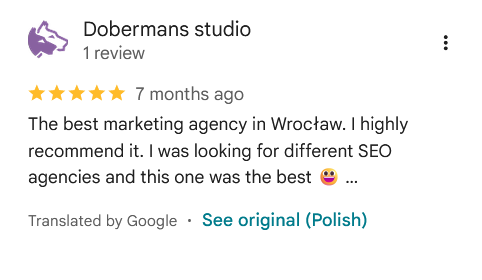

Read these reviews on Google. Reviews written in Polish or Turkish are shown in Google’s own translation.
Questions we get asked
What is AI SEO?
AI SEO is the practice of making a brand retrievable by AI systems and correctly described inside the answers they generate. It covers crawler access, entity clarity, structured data, answer-shaped content and measurement, across ChatGPT, Gemini, Claude, Perplexity, Copilot and Google AI Overviews.
Is AI SEO a replacement for our current SEO?
No. It sits on top of it. Answer engines still read crawlable, fast, well-linked pages, so technical and organic SEO stays the foundation. AI SEO adds the layer that decides how a model describes you once it has read those pages.
Which of the eight services do we actually need?
Usually three or four of them, and the baseline tells us which. If models cannot reach your pages, LLM SEO comes first. If they reach you but describe you wrongly, entity structuring and schema come first. We sequence the rest behind that.
Can you guarantee ChatGPT will recommend us?
No, and be wary of anyone who does. Model outputs are probabilistic and change between versions and even between sessions. What we can do is make you the best-evidenced and most corroborated candidate for the questions that decide your shortlist.
How long does AI SEO take to show up in answers?
It depends on how much of your entity footprint already exists and how often each engine refreshes its sources. Retrieval and structured data fixes can surface within weeks. Corroboration and authority work compounds across months, which is why we track it monthly.
How do you report on something with no rank tracker?
We run a fixed set of your buyers’ questions against every engine on a schedule and record two numbers: how often your brand is named in the answer, and how often your domain is cited. AI visibility tracking turns those into the monthly report.
Find out what AI says about you today.
We will run your real buyer questions across every major engine and send back the baseline: which questions name you, which name a competitor, and which of the eight services closes the gap fastest.
Last reviewed 28 July 2026.