Who We Help · Healthcare
Marketing for clinics
patients already trust.
A patient checking a clinic online is looking for reassurance as much as information: who will treat them, what other patients said, and whether the practice looks like it takes them seriously. We build the visibility and the trust signals. The clinical facts stay entirely with your practice.
“family dentist near me”
- 1 Your practice Verified reviews
- 2 Other clinic
- 3 Other clinic
- 4 Hidden behind “more places”
What healthcare marketing has to get right
- Practitioner Trust
- Patient Privacy
- Local & Symptom Search
- Practice-Approved Content
- Multi-Location Groups
- Ad Platform Policies
- Review Management
- Structured Data
How we approach healthcare marketing
-
01
Lead with trust signals
Practitioner credentials, real photography and genuine reviews shown clearly, because a patient checks who is treating them before they check anything else.
-
02
Write for local and symptom search
Location pages and content built around the treatment names and nearby searches patients actually type, not around guesswork.
-
03
Keep every clinical claim with the practice
Copy drafted for review, then published only once the practice’s own clinicians have approved it. We never publish a claim they have not signed off.
-
04
Work inside each platform’s rules
Campaigns and content built to Google’s and Meta’s published healthcare advertising policies, not around them.
Healthcare marketing is the work of building visibility and trust for a clinic or practice online, through local search presence, an accessible website and patient-facing content, without describing clinical outcomes or making treatment claims. Those remain the practice’s own responsibility to write and approve. Our part is getting the approved facts found, read clearly and trusted.
What makes this different from most industries
The mechanics of local search and content marketing carry over from any other business. What changes is how much weight trust carries, how specifically people search, and how closely the work has to stay inside rules neither of us can rewrite.
Trust decides the click
A patient weighs a clinic’s credentials, reviews and clarity of information before almost anything else. Vague copy or an out of date listing reads as a reason to look elsewhere, faster than it would for most other purchases.
Patients search locally, by name
Most searches pair a treatment or symptom term with a place: a procedure name, a specialty, or simply “near me”. Local structure and genuinely useful content matter more here than broad brand terms.
Ad platforms set their own rules
Google and Meta both restrict certain targeting and claims around healthcare advertising, and those rules move. We build campaigns to each platform’s current policy rather than around it.
Who owns what, stated plainly
Healthcare marketing goes wrong fastest when an agency blurs the line between visibility work and clinical content. We set the line out before we start.
| Area | Who owns it | What we do |
|---|---|---|
| Clinical claims | The practice | We draft copy for clarity and structure. The practice’s own clinicians review and approve every clinical statement before it is published. |
| Local search visibility | LineUp | Google Business Profile, location pages, citations and map pack presence. |
| Website and trust signals | LineUp, with practice input | An accessible practice website with credentials, real photography and clear calls to action. |
| Patient reviews | Patients, system run by LineUp | A request process that respects privacy, plus a reply to every review the practice receives. |
| Ad compliance | The ad platform | Campaigns built inside Google’s and Meta’s published healthcare advertising policy, not around it. |
| Structured facts | The practice, published by LineUp | Entity and schema data confirmed by the practice, then published consistently everywhere it appears. |
Who this is for
Any practice where a patient chooses you before they meet you, based on what they can find, benefits from this work.
Private clinics and single-practitioner practices
A named practitioner is the brand. The site, the profile and the content need to introduce them clearly and back that introduction with genuine reviews rather than vague reassurance.
Dental practices
Recurring, appointment-led demand with heavy local competition. Map pack presence and a website that answers the practical questions, hours, insurance, first-visit process, tend to matter more than broad content.
Aesthetic and wellness clinics
Higher scrutiny from ad platforms and a patient who researches longer before booking. Clear, practice-approved information and visible credentials do more work here than promotional language.
Multi-location healthcare groups
Every branch needs its own profile, its own reviews and a page written for that address, while practitioner facts stay consistent across the whole group.
How we work with a healthcare practice
Six steps, with the practice’s sign-off built into the process rather than treated as an afterthought.
-
1
Audit visibility and trust signals
We review the Business Profile, the website and existing reviews against what a patient is actually looking for, and report what is missing before proposing any work.
-
2
Agree the approval process
We confirm who at the practice reviews clinical copy, and set a turnaround so content does not stall waiting for sign-off. Nothing clinical publishes without it.
-
3
Build the local and structured-data foundation
Local SEO for the practice and every location, backed by entity structuring and schema markup so practitioner facts resolve consistently.
-
4
Draft patient education content
Content written around the questions patients actually search, drafted for the practice’s review and published only once approved.
-
5
Launch compliant campaigns
Paid search and social built to each platform’s current healthcare advertising policy, with claims kept inside what the practice has approved.
-
6
Run the review system and report
A privacy-respecting request process, a reply to every review, and monthly reporting on visibility rather than promises about volume.
What you actually receive
Handed over in a form your team and your clinicians can keep running, including the review process behind the Google reviews further down this page.
Visibility and trust foundations
- Google Business Profile setup and optimisation for every location
- Practitioner and practice structured data (schema markup)
- A trustworthy, accessible practice website
Content and campaigns
- Patient education content drafted for clinical review and approval
- Review generation and response system built around patient privacy
- Campaigns built to each ad platform’s healthcare advertising policy
“We started with a free strategy that showed us specific gaps in our campaigns. Today, LineUp is our regular partner, delivering a measurable return on every invested zloty.”
What clients say on Google
Unedited screenshots from our Google Business Profile. Swipe, or use the arrows, to read them all.


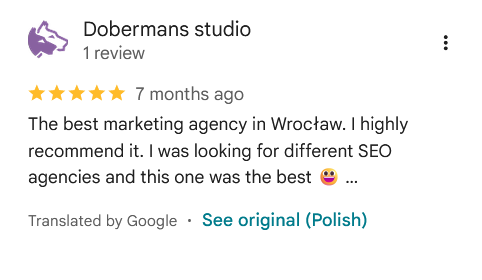

Read these reviews on Google. Reviews written in Polish or Turkish are shown in Google’s own translation.
Questions we get asked
Do you write the clinical claims in our marketing copy?
No. Every clinical claim, treatment description and outcome statement comes from the practice’s own clinicians, and nothing goes live until the practice has reviewed and approved it. Our job is visibility and presentation, getting the approved facts found, read clearly and trusted, not authoring medical content.
How do reviews work for a healthcare practice?
The same way they work for any local business, with more care taken. We build a request process that respects patient privacy, never asks a patient to name a condition or treatment in public, and replies to every review that arrives. We do not incentivise or fabricate reviews. That breaks platform policy and puts the whole profile at risk of suspension.
We run more than one location. How is that handled?
Each location gets its own Google Business Profile, its own page and its own set of reviews, written so it reads as a real branch rather than a template with a swapped city name. Practitioner and practice facts stay consistent across locations through the same entity structuring work we do for a single-site practice.
What do ad platforms restrict for healthcare advertising?
Platforms such as Google and Meta apply extra scrutiny to healthcare-related ads. Certain targeting options are limited, and claims about conditions or outcomes are policed more closely than in most other industries. The specifics change and vary by platform, so rather than quote a fixed rulebook we build every PPC campaign against each platform’s current published policy and recheck it when the rules move.
Why does structured data matter for a healthcare practice?
Search engines and AI answers increasingly describe a practice in their own words instead of just linking to it, drawing on whatever facts they can find and corroborate. Structured data and entity structuring give them an accurate practitioner name, credential, address and specialty to work from, instead of an outdated listing or someone else’s guess.
Can you guarantee more patients or a specific ranking?
No. We do not promise patient volume, rankings or clinical outcomes, and any agency that does is describing something outside its control. What we commit to is the visibility and trust-building work, an accurate, well-structured presence that gives your practice a fair chance to be found and chosen.
Find out where your practice stands today.
We will check your visibility, your trust signals and your review process, and send you the list of fixes in priority order. Every clinical claim we suggest testing stays with your own clinicians to approve. See the other industries we work with on the Who We Help page.
Last reviewed 28 July 2026.