Aesthetic Clinic Marketing UK: Patient Acquisition [2026]
Aesthetic clinic marketing in the UK is a specialized digital marketing discipline focused on driving bookings for non-surgical cosmetic treatments. By combining targeted Google Ads, Instagram video marketing, and localized Google Maps optimizations—while staying compliant with ASA rules on medical claims and before-and-after photos—aesthetic clinics can scale patient acquisitions profitably.
 Ekrem Abdulkerim
Updated 08/09/2026
6 min read
Ekrem Abdulkerim
Updated 08/09/2026
6 min read
1. The Aesthetic Patient Journey & Booking Psychology
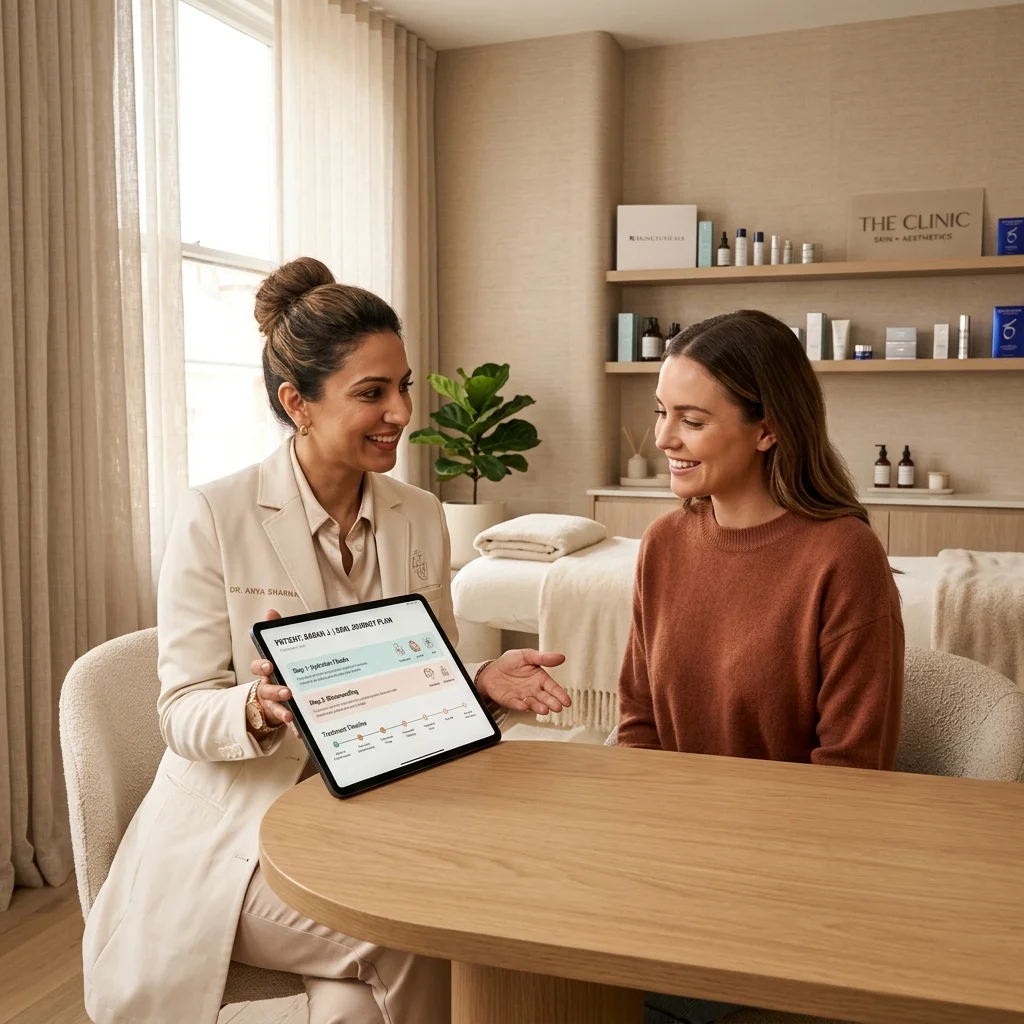
The aesthetic patient journey is driven by personal confidence and careful research, taking anywhere from 14 to 90 days from initial treatment interest to final booking. Prospective clients prioritize clinical credentials, natural-looking outcomes, and honest pricing, making visual social proof the single largest driver of conversion.
Unlike medical emergency treatments, non-surgical aesthetics (like dermal fillers, microneedling, skin boosters, and body sculpting) are high-consideration discretionary investments. Patients are often nervous about artificial results or clinical complications [1].
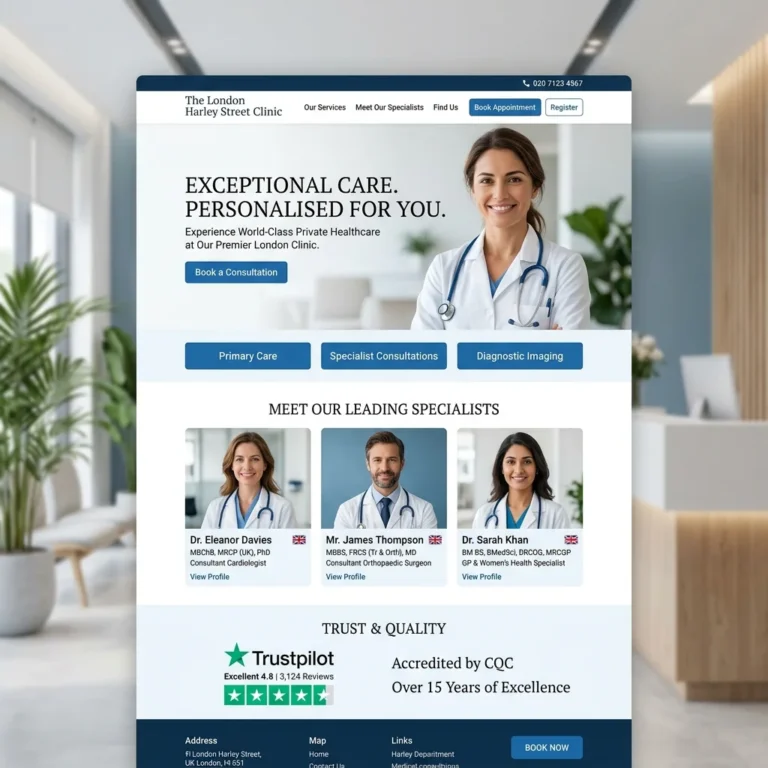
To secure these high-ticket bookings, your website cannot rely on generic stock photography of model faces. Your site must display real, natural treatment outcomes performed by qualified, named clinical practitioners. Trust is the primary keyword in aesthetics marketing, and it must be backed by a broader, compliant private healthcare marketing strategy [1].
2. Google Ads and Paid Search for High-Ticket Treatments
Google Ads for UK aesthetic clinics represent a highly effective way to capture active treatment searches, yielding average CPCs of £1.80 to £3.20 and patient acquisition costs (PAC) of £80 to £120. Bidding should target high-intent, long-tail terms like “laser skin resurfacing Surrey” rather than broad terms like “botox.”
When running Google Ads, the selection of search terms determines whether your campaign is a profit center or a loss [2]. Broad search terms (e.g. “skincare”) capture users seeking tips or low-cost products, whereas localized treatment queries (e.g. “coolsculpting clinic Birmingham”) represent high-intent patients ready to schedule consultations.
Prescription-Only Medicine (POM) Advertising Constraints
A critical operational hurdle in Google Ads is the restriction on prescription-only medicines (POMs). Botulinum Toxin (Botox) is a POM in the UK. Google Ads policy and the ASA CAP Code strictly prohibit the advertising of POMs to the general public. Bidding on keywords like “Botox near me” or including “Botox” in your ad text will lead to immediate ad disapproval or account suspension [3].
The Fix: Focus your ad copy and targeting on treatment outcomes and brand terms. Use compliant phrases like “wrinkle relaxing treatments,” “fine line reduction,” or “anti-ageing consultations.”
3. ASA Compliance and Before-and-After Photo Regulations
ASA before-and-after photo regulations dictate that UK cosmetic clinics must present honest, unedited treatment results without lighting or filter modifications. All images must represent typical clinical outcomes, and the use of photoshop or camera angles to exaggerate treatment benefits is strictly prohibited under CAP Code Section 12.
Before-and-after comparison photos are highly effective visual proof, but they are also heavily scrutinized by the Advertising Standards Authority [3]. The ASA frequently issues rulings against clinics for misleading comparison photos.
Aesthetic Image Compliance Guidelines
- No Lighting Adjustments: The “before” photo and the “after” photo must be captured under identical studio lighting conditions. Exaggerating skin clarity by changing brightness is flagged as misleading [3].
- Consistent Makeup & Angles: Patients should not wear makeup in post-treatment photos if it masks skin texture, and camera angles must be mathematically identical.
- No Photoshop Modifications: Airbrushing skin, smoothing lines, or modifying body silhouettes post-treatment will result in immediate CAP violations.
4. Instagram and Video Consultations: Driving Social Proof
Aesthetic clinic social media marketing relies on Instagram Reels and educational video content, showing CTRs averaging 8% to 11% for video consultations. Publishing clinician-led videos explaining the science behind treatments and answering safety concerns performs significantly better than static image grids.
In aesthetic marketing, video is the most powerful trust-building tool [1]. Patients buy from the clinician, not the clinic logo. Clinician-led videos explaining the details of a treatment (e.g. “What to expect during a profile harmonization consultation”) humanize the practice.
Maximizing Video CTR
Ensure your videos address patient pain points directly. Use caption overlays, keep introductory hooks under 3 seconds, and always direct viewers to a clear action (e.g. “Link in bio to check our practitioner availability next week”) [1]. Video assets should act as educational touchpoints, driving high-trust traffic to your landing pages.
5. Local Maps Supremacy and Review Portals
To achieve local search prominence, aesthetic clinics must maintain a Google Business Profile listed under the primary category “Skin Care Clinic” or “Medical Spa”, and generate weekly client reviews. Since 89% of patients look for online reviews, maintaining ratings above 4.7 stars on GBP and Trustpilot is essential for converting local searchers.
Proximity is a critical ranking factor for regional beauty and aesthetic searches [2]. When patients search “PRP therapy near me,” Google displays local map pack results. Your Google Business Profile must represent a physically verifiable branch location, not a virtual address, to maintain local authority.
Encourage clients to leave feedback mentioning the specific treatment they received (e.g. “I love my microneedling results”). Google parses review text to confirm query relevance, helping your profile rank for niche treatments in your geographical area [2].
6. The 60-Day Aesthetic Scaling Roadmap
A 60-day aesthetic scaling roadmap starts with cleanup of GBP local details and compliance edits (Days 1–15), landing page build and Google Ads deployment (Days 16–30), launching automated reviews and Instagram video campaigns (Days 31–45), and reviewing analytics to optimize conversion channels (Days 46–60).
To systematically scale your aesthetic patient volume, follow this structured roadmap:
Days 1–15: Establish Compliance & Local Foundations
- Verify your website contains no references to prescription-only medicines (POMs) in promotional copy.
- Optimize your Google Business Profile name, primary category (e.g. “Skin Care Clinic”), and upload 10 high-resolution branch photos.
- Claim your profiles on Trustpilot and medical review sites.
Days 16–30: Deploy Landing Pages & Ads
- Build dedicated landing pages for your top three services (injectables, laser, skin therapy).
- Set up GA4 conversion events for consultation bookings, form submissions, and direct phone calls.
- Launch Google Ads targeting localized, high-margin treatments (excluding POM names from ad texts).
Days 31–45: Social Proof & Video Campaigns
- Create 5 educational reels showing the clinic environment, treatment processes, and practitioner explanations.
- Integrate automated review requests into your post-treatment client checkout templates.
- Add local schema markup to your website branch pages.
Days 46–60: Conversion Rate Optimization
- Audit landing page bounce rates and LCP load speed (target: under 2.5 seconds).
- Review ad group performance and optimize keywords to reduce cost-per-qualified-lead (CPQL).
Ready to Attract More High-Value Aesthetic Clients? At LineUp Agency, we build high-converting performance marketing engines for aesthetic clinics across the UK. We optimize your search traffic, manage compliant ad campaigns, and scale patient bookings.
How We Gathered This Data
This aesthetic marketing playbook outlines verified operational performance benchmarks and cosmetic regulatory codes collected in June 2026. Sourced evidence includes:
- Aesthetic Practice Audits (LineUp Agency, 2025–2026): Primary data from managing ad spends across regional UK aesthetic centers, indicating an average PAC between £80 and £120.
- Advertising Standards Authority (ASA) Compliance: Direct guidance on non-surgical aesthetic procedure claims, botulinum toxin promotions (prescription-only restrictions), and photo manipulation rules.
- SearchLab Digital & Social Index (2025): Organic social data tracking Instagram Reels video performance, showing CTRs averaging 8% to 11% for clinics.
Sources & References
All aesthetic benchmarks, compliance guidelines, and performance metrics are verified through cosmetic trade sources and ad performance audits:
- Advertising Standards Authority (ASA) CAP Code Guidance — Cosmetic and non-surgical procedures marketing codes, prescription medicine rules, and cosmetic claim substantiations. Rule 12.1 photo guidance. asa.org.uk ↗
- SearchLab Digital & Social Index — UK aesthetic market analysis: average CPC (£1.80–£3.20), social CTR (8%–11%), and clinical landing page conversion statistics. ROI metrics. searchlab.nl ↗
- Private Healthcare Marketing UK — Hub strategy page mapping out broader client acquisition and patient lifecycle value frameworks. Cross-link resource. lineup.agency ↗
Ekrem Abdulkerim
SEO Strategist and Founder of LineUp. I help brands dominate search through technical precision and measurable growth.
Stay Ahead of the Curve
Get the latest SEO strategies and marketing insights delivered to your inbox.
Ready to grow your practice?
See how LineUp helps dental and private healthcare practices rank, get chosen and book more patients.