The short version
- Clicks on Google's first page cluster at the top: the first organic result averages 27.6% CTR and the top three take 54.4% of clicks (Backlinko).
- When an AI Overview appears, every position gets fewer clicks, and Ahrefs measured a 58% lower CTR for position one (December 2025 data).
- Informational queries are hit hardest, while commercial and local searches still send more clicks to websites.
- Judge rankings by the enquiries and sales they bring, because fewer well-matched clicks can beat a larger volume of irrelevant ones.
- In Search Console, falling CTR with stable positions is the clearest sign that AI Overviews or other features are taking your clicks.
For years the advice was simple: get onto the first page of Google and the clicks will follow. The first page still matters, but the clicks on it are spread very unevenly, and AI Overviews have changed the picture again since 2024.
This guide pulls together the click-through rate (CTR) studies on Google first page clicks that you can check for yourself, explains why they disagree, and shows what that means for the way you measure SEO. Every figure below links to the study it comes from.
How are clicks spread across Google’s first page?
Clicks are concentrated at the very top. In Backlinko’s analysis of about 4 million Google results, the first organic result had an average CTR of 27.6%, the top three results took 54.4% of all clicks, and only 0.63% of searchers clicked anything on page two. When an AI Overview appears, every position gets fewer clicks, including position one.
What the CTR studies say
No single study gives “the” CTR for each position, because each one measures a different set of searches. Backlinko’s figures come from a large sample of results and show the overall shape: position one gets about 10 times more clicks than position ten. Newer data from First Page Sage, based on 3.67 billion impressions from 1,184 domains between March and August 2026, splits CTR by whether an AI answer appeared:
| Organic position | No AI answer | AI answer present | Blended |
|---|---|---|---|
| 1 | 22.6% | 3.6% | 7.1% |
| 2 | 10.2% | 1.4% | 3.0% |
| 3 | 5.8% | 0.8% | 1.7% |
| 4 | 3.7% | 0.5% | 1.1% |
| 5 | 2.5% | 0.3% | 0.7% |
| 10 | 0.5% | 0.1% | 0.2% |
First Page Sage’s blended numbers are much lower than Backlinko’s because they are weighted by impressions across a huge number of queries, including long-tail searches where few people click anything. The two studies agree on the pattern, though: the first result earns far more clicks than the second, and the drop continues down the page.
Why the top results take most of the clicks
Several things push clicks towards the top. Searchers trust the first result and often stop there. On commercial searches, ads, shopping results and the local map pack sit above or among the organic results, so position four can be well below the fold on a phone. On informational searches, featured snippets and AI Overviews answer the question before the searcher reaches any link.
That is why “we are on page one” is a weak goal on its own. Position eight and position one are both on page one, but on First Page Sage’s figures one gets many times more clicks than the other.
What AI Overviews have done to clicks
AI Overviews launched in the US in May 2024, and Google announced on 15 August 2024 that it was bringing them to the UK, India, Japan, Indonesia, Mexico and Brazil. Since then, several independent studies have measured what happens to clicks when an AI Overview appears.
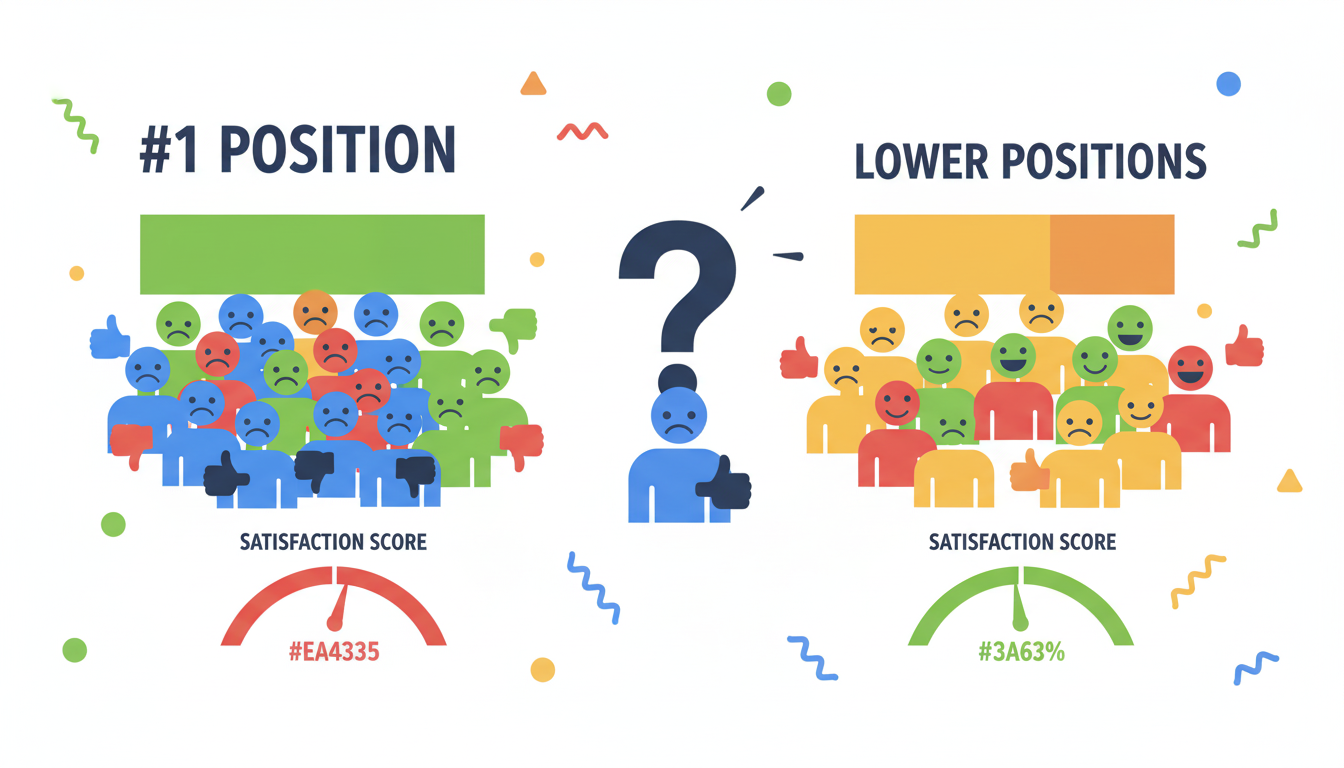
- Ahrefs: in a study of 300,000 keywords, an AI Overview was linked to a 34.5% lower average CTR for the position-one result (March 2025 data). Ahrefs re-ran the study with December 2025 data and found a 58% reduction.
- Seer Interactive: across 3,119 informational queries from 42 organisations, organic CTR on queries with AI Overviews fell 61% between June 2024 and September 2025. CTR on queries without AI Overviews also fell, by 41%, so not all of the decline is down to AI Overviews.
- Pew Research Center: in browsing data from 900 US adults in March 2025, users clicked a traditional result in 8% of visits when an AI summary appeared, against 15% when it did not. Only about 1% of visits included a click on a link inside the summary.
- MailOnline: its SEO director reported, as covered by Press Gazette, that on keywords where the site ranks first, CTR fell from about 13% to under 5% on desktop and from about 20% to 7% on mobile when an AI Overview appeared, an average drop of 56.1% on desktop and 48.2% on mobile.
The studies use different samples and methods, so the exact percentages differ. The direction does not: when an AI Overview appears, Google first page clicks fall, and informational queries are hit hardest. Commercial and local searches, where people want to compare, book or buy, still send more clicks to websites.
Being cited in the AI Overview helps. Seer found that brands cited in an AI Overview had 35% higher organic CTR than brands that were not, while noting that this is a correlation: stronger brands may simply be cited more often.
Want this done for you?
We do SEO and AI search for businesses like yours. Start with a free audit and get a written plan and price within 48 hours.
Clicks vs. Conversions: The Real Business Metric
Clicks are a means to an end. A smaller number of clicks from the right searches can be worth more than a large number from the wrong ones, so judge rankings by the enquiries and sales they produce.
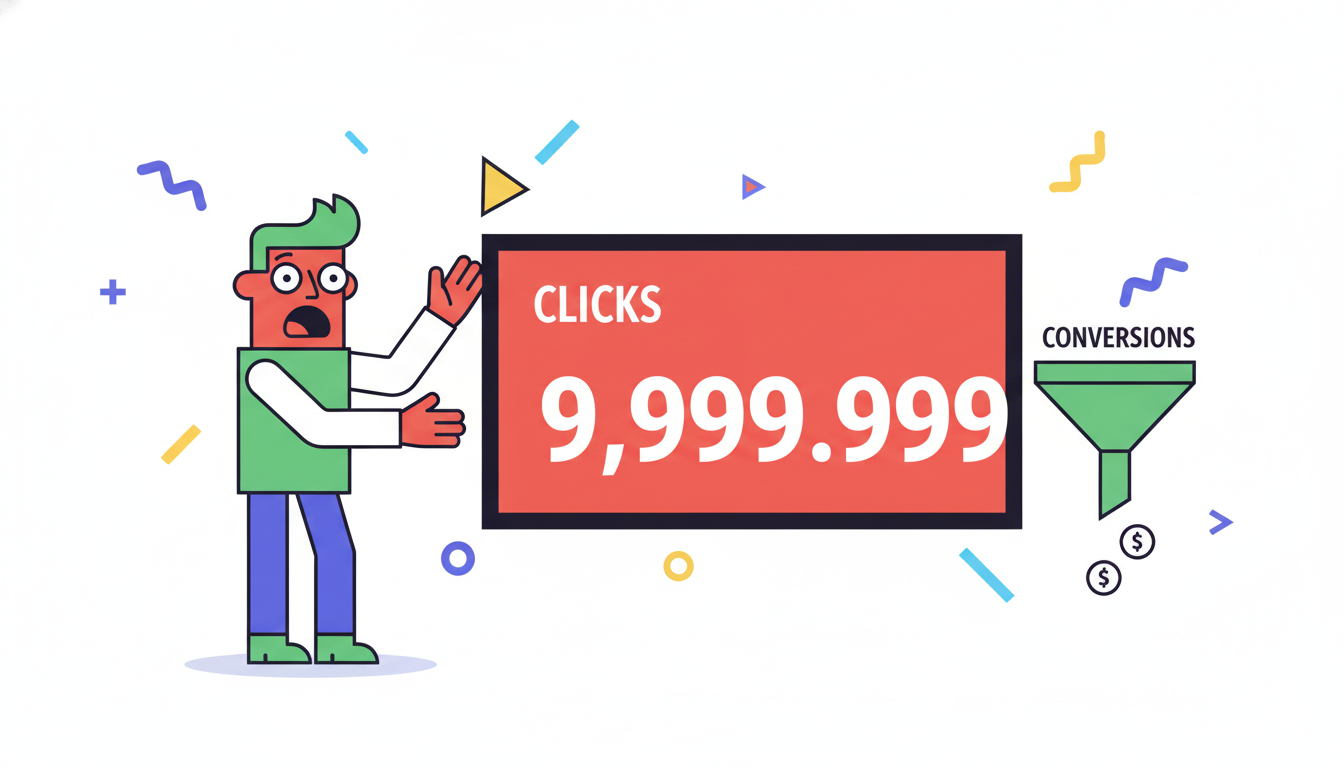
Consider two hypothetical websites:
- Website A: ranks first for a high-volume keyword, gets 1,000 clicks a month and converts 1% of them, which gives 10 customers.
- Website B: ranks third for a smaller but more relevant keyword, gets 300 clicks a month and converts 10%, which gives 30 customers.
Website B wins three customers for every one that Website A wins, with 70% fewer clicks. The same arithmetic applies to your own site: raising a conversion rate from 2% to 4% doubles the results from the traffic you already have.
Traffic Quality Over Quantity
Not every click is equally valuable. How well a visit matches what you sell matters more than the number of visits.
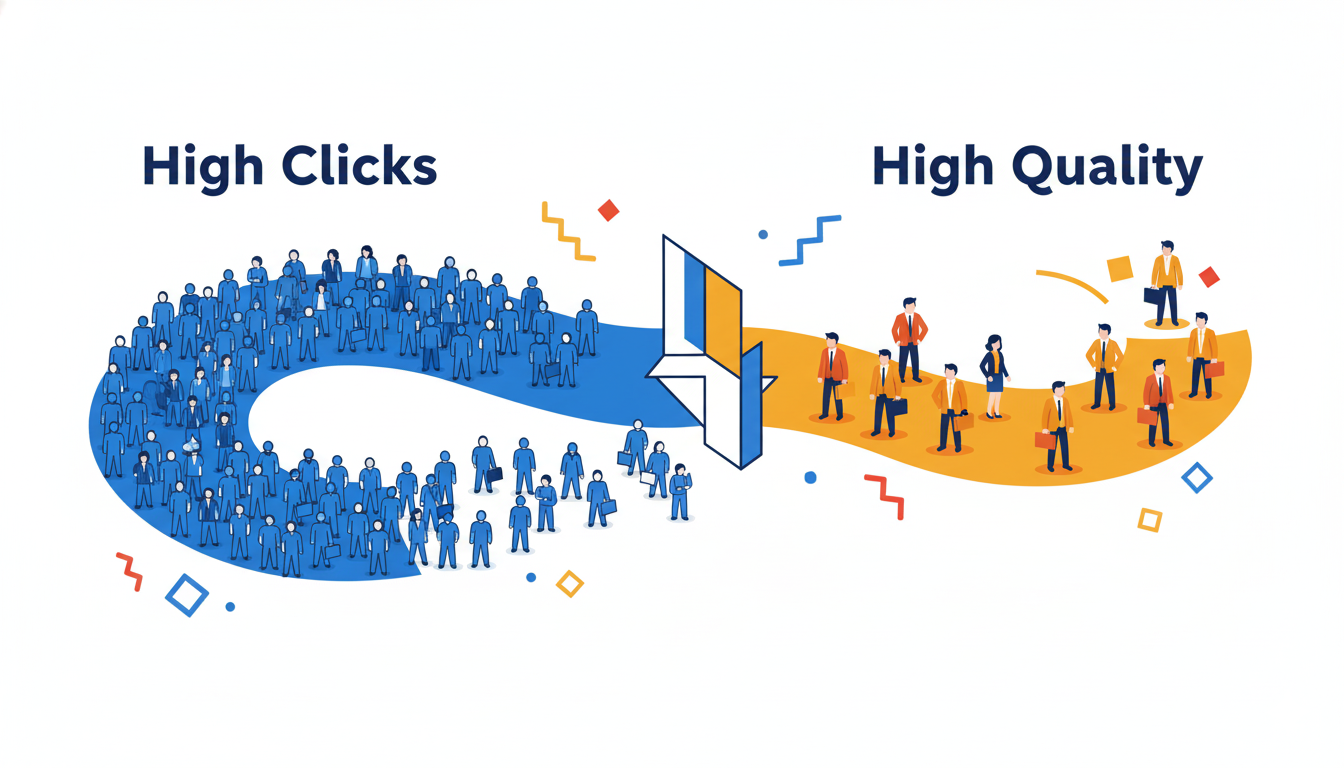
Search intent is the best guide to how likely a click is to turn into business:
- Informational intent: people looking for knowledge. These searches are the most likely to show AI Overviews and usually convert least.
- Commercial investigation: people comparing options before they buy. Medium conversion potential.
- Transactional intent: people ready to buy, book or enquire. The highest conversion potential.
- Navigational intent: people looking for a specific brand or site. Valuable when it is your brand.
Commercial and transactional keywords often have lower search volumes, but they tend to produce more business per click than high-volume informational topics. Informational content still has a job, building trust and earning links and AI citations, but measure it on those terms.
What Engagement and Speed Can Tell You
Once someone has clicked, what they do next tells you whether the page served them. Treat engagement as a test of the page, not as a lever for rankings.
Engagement: read it in context
Time on page, scroll depth and the share of visitors who go on to a second page or a contact form show whether a page meets its visitors’ needs. Compare pages of the same type, because a contact page and a long guide will never look alike.
Bounce rate: context matters
A high bounce rate can mean the page missed the point of the search. It can also mean the page answered the question at once and the visitor left satisfied, or called you straight from the page. Check bounce rate alongside conversions before you change anything.
Core Web Vitals: the technical foundation
Google says Core Web Vitals are used by its ranking systems as part of page experience, but that there is no single page experience signal and that good scores do not guarantee top rankings. The Core Web Vitals documentation covers loading, interactivity and visual stability. The bigger reason to fix slow loading and layout shifts is that they lose you visitors who have already clicked.
Building Beyond Clicks: Brand Recognition
With fewer clicks available on many searches, recognition matters more. People who know your name are more likely to choose your result, search for you directly, and contact you after reading an AI answer that mentions you.
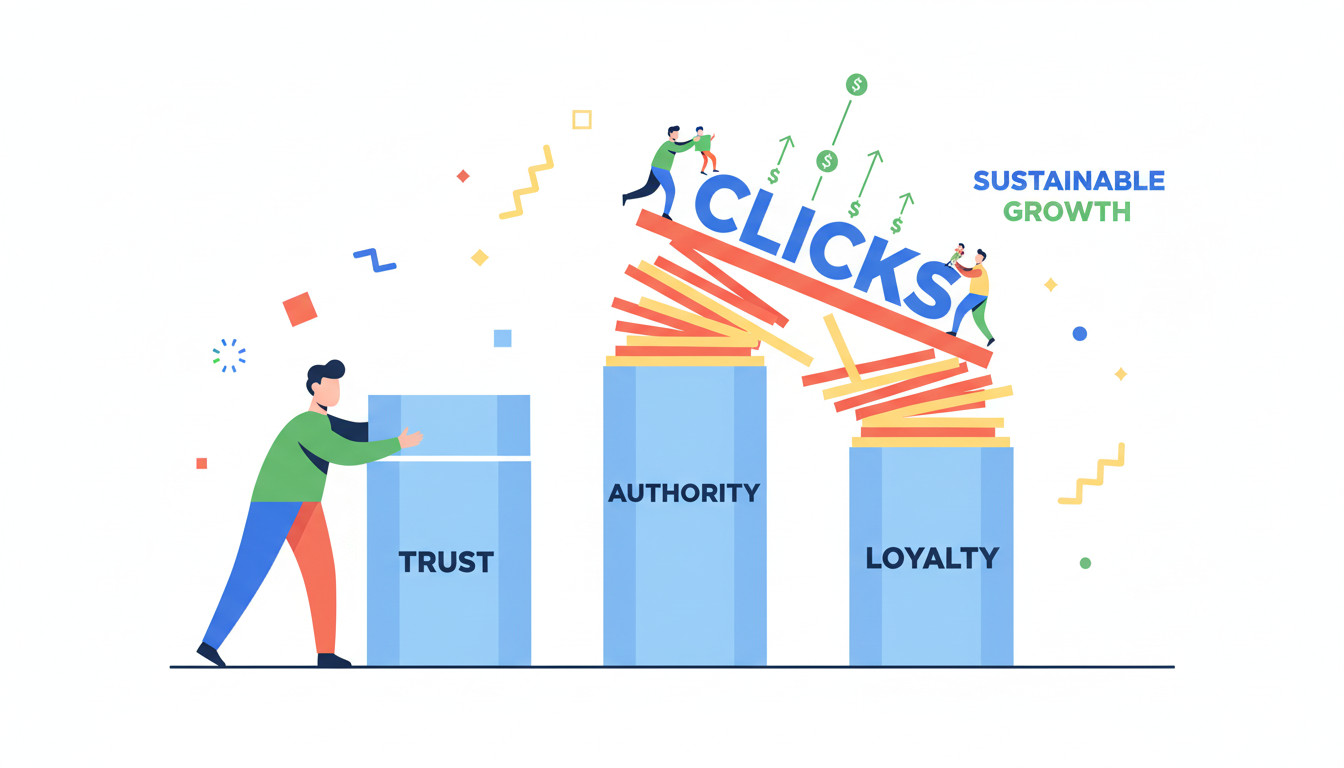
Brand building supports search in several ways:
- More branded searches: people who search for your name are close to buying, and you control those results.
- Better conversion rates: visitors who already trust you convert more readily.
- Room on price: recognised businesses compete less on price alone.
- More citations: well-known brands tend to be cited more often in AI answers, as Seer’s study suggests.
This is why businesses that act on insight into what drives their revenue, rather than on rankings alone, tend to grow more steadily.
The Metrics That Matter in 2026
If rankings are not the whole story, track these instead:
1. Clicks and impressions, not just positions
The Search Console Performance report shows clicks, impressions, CTR and average position for each query and page. Falling CTR with stable positions is the clearest sign that AI Overviews or other features are taking clicks on those searches.
2. Organic conversions and revenue
Track which landing pages and query groups produce enquiries, bookings and sales. That is the number that should decide where your SEO time goes.
3. Traffic value
Tools such as Semrush and Ahrefs estimate what your organic traffic would cost as paid clicks. Treat it as a rough comparison, not revenue, but it helps explain the value of SEO to people who think in ad budgets.
4. Engagement by page type
Pages per visit, scroll depth and conversion rate by page type show whether visitors find what they came for once they arrive.
5. Branded search volume
A rise in searches for your business name shows growing awareness. It is also one of the few search metrics that AI Overviews do little to erode.
If you want help deciding which searches are worth chasing for your business, our SEO services start with exactly that question.
Frequently Asked Questions
No. Organic search still sends a large share of clicks to websites, especially on commercial and local searches. The change is in what you aim for: rankings on searches that lead to business, content that earns citations in AI answers, and pages that convert the visitors you get.
It depends on the study and the query type. Ahrefs measured a 58% lower CTR for position one on keywords with AI Overviews (December 2025 data), Seer Interactive a 61% drop on informational queries, and Pew Research found people clicked a result in 8% of visits with an AI summary against 15% without. Informational queries see the largest falls.
Both matter. On First Page Sage’s 2026 figures, moving from position two to position one more than doubles expected CTR when no AI answer appears. Doubling a conversion rate from 2% to 4% also doubles results, and you control it directly. Work on conversion first if your site already gets steady traffic; work on rankings first if it gets very little.
Target commercial and local searches where people want to act, write content specific enough that a summary cannot replace it, structure pages so they are easy to cite, build your brand so people search for you by name, and add other channels such as email so you are less dependent on one source of traffic.
Yes. Searches with clear commercial or local intent, such as services near me, bookings and product comparisons, still produce Google first page clicks and enquiries, and AI Overviews appear less often on many of them. The principles are the same everywhere, though: measure the business each click brings, not just the click.

Co-Founder, LineUp Agency
Ekrem Abdulkerim is the co-founder of LineUp. He leads the performance side: analytics and tracking, technical SEO and Google Search Console. Search, ads and video for businesses that want more customers. Every guide is based on what we see in client accounts. See our services