The short version
- Local SEO makes your business appear when people nearby search for what you sell.
- Google ranks local results mainly on relevance, distance and prominence.
- You cannot pay Google for a better local ranking.
- Start with a verified, complete Google Business Profile, then build reviews, listings and local links.
Local SEO is the work of making your business show up when people near you search for what you sell. It covers your Google Business Profile, your website, your reviews and the mentions of your business elsewhere online. Done well, it puts you in the map results at the moment someone is ready to call or visit.
If your phone is quiet and your footfall is slow while competitors appear in the map results, the cause is often visibility rather than quality. This guide explains what local SEO is, how Google decides who to show, and what to fix first.
What is local SEO?
Local SEO is the process of improving your visibility in Google Search and Google Maps for searches tied to a place, such as “plumber near me” or “dentist in Leeds”. It focuses on ranking within a specific area rather than across the whole country.
The key term is the Local Pack. The Local Pack is the block of three map listings that Google shows above the regular results for local searches. Most local SEO work aims to earn a place in it.
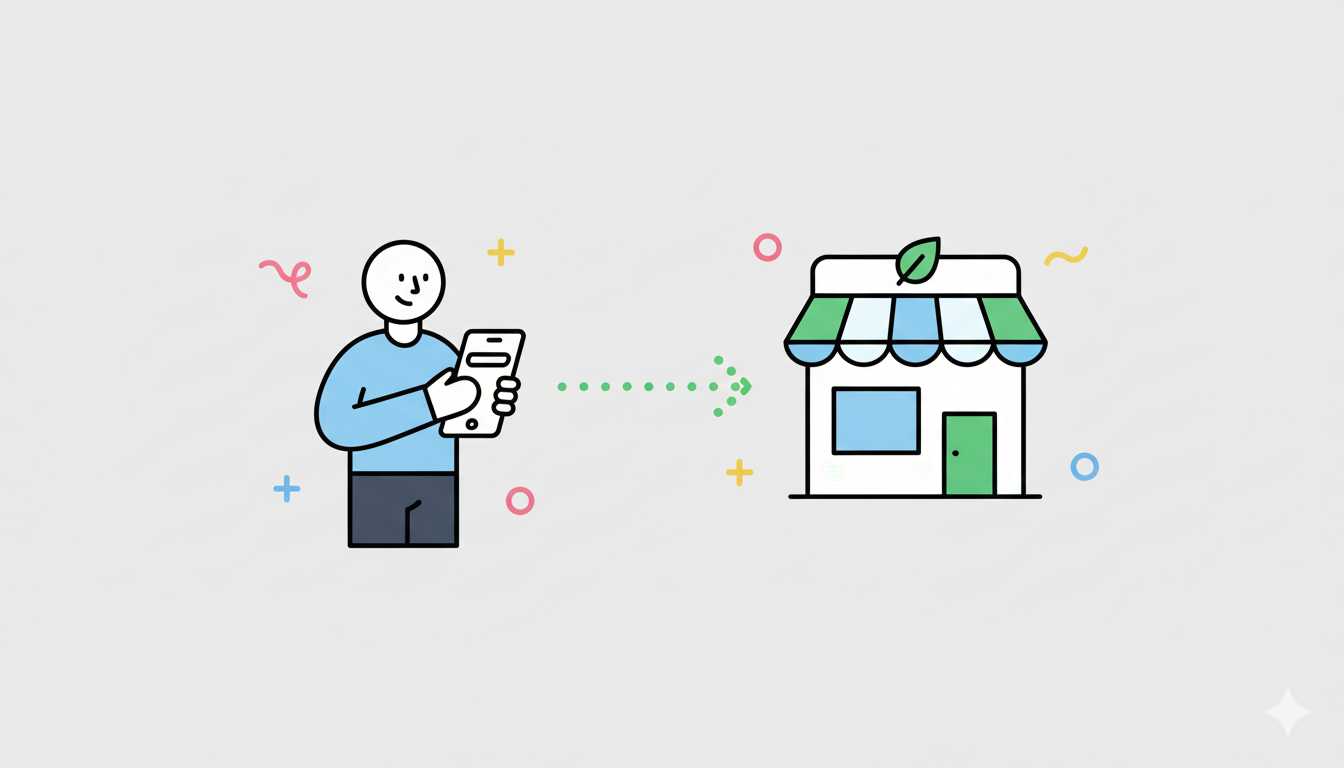
Imagine a visitor stands on a street corner near your business and asks their phone, “Where’s the best coffee shop near me?” Local SEO is how you make sure Google points them to your door and not your competitor’s.
Standard SEO tries to rank a page for everyone who searches. Local SEO ranks a business for people in a particular place. Your profile, your address, your reviews and your local links matter far more than they do for a national site.
AI features now summarise local businesses too. They pull from the same sources: your Google Business Profile, your website and third-party mentions. Accurate, consistent information helps in both. Our page on Google AI Overviews optimisation covers that side in more depth.
Local SEO also works alongside the rest of your marketing. Local content, social media and word of mouth all feed the same signals: people see you, talk about you and link to you.
Why is local SEO important for your business?
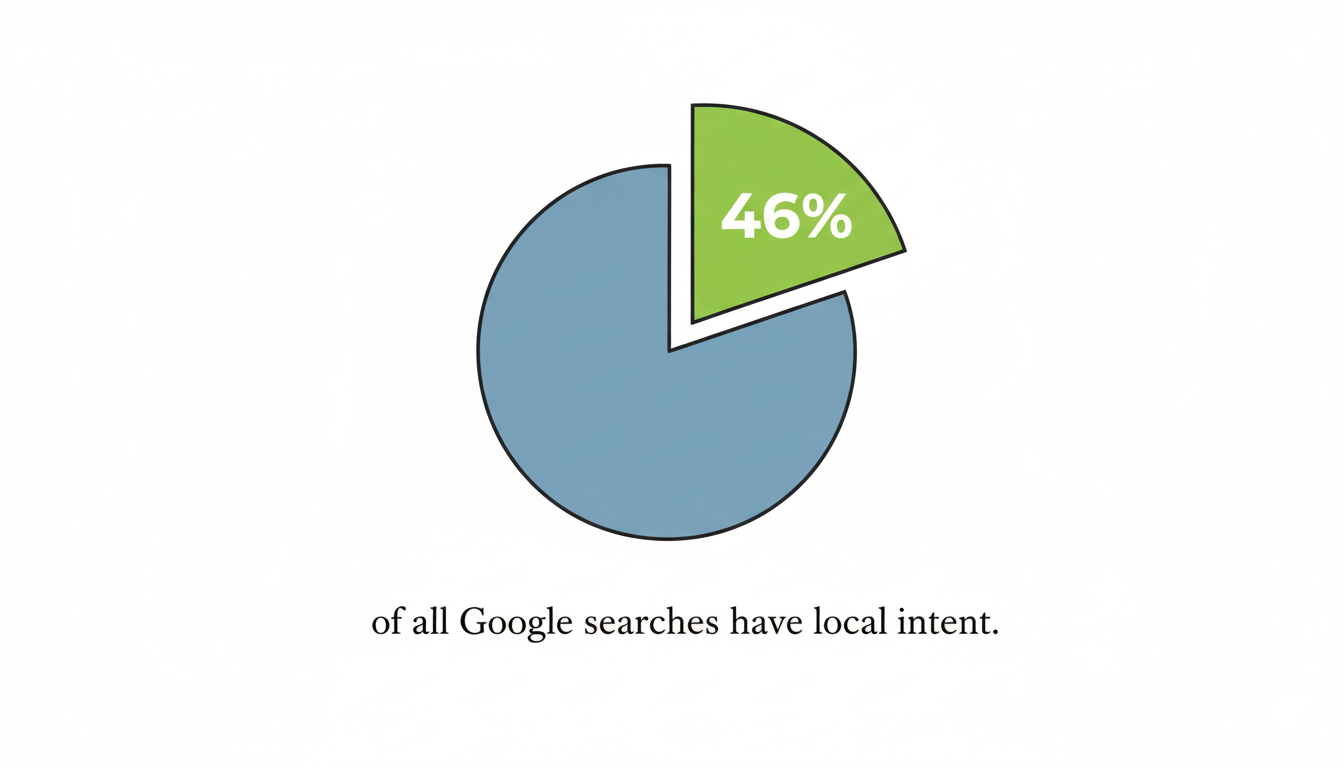
Local SEO matters because people who search for something near them are usually close to buying. Someone typing “running shoes” may be researching. Someone typing “running shoes near me” is planning a trip to a shop. Ranking for those searches puts you in front of ready customers.
Three facts show why the effort pays off, and why you should be wary of anyone promising a shortcut:
- Google says local results are mainly based on relevance, distance and prominence. You can influence two of those three.
- Google also states that there is no way to request or pay for a better local ranking. Anyone selling a guaranteed position is selling something that does not exist.
- Google tells businesses that complete and accurate profile information makes them more likely to show up in local results, and that a verified profile is more likely to appear.
A strong position in local search is a steady source of enquiries, and you do not pay per click for it. The cost is time and consistency, not ad spend.
From our work: in the local projects we run for restaurants, clinics and shops, the first gains almost always come from basics that were never done: an unverified or half-filled profile, the wrong primary category, or a website that never says which town the business serves. We fix those before touching anything advanced. Our Google Maps case study for a Turkish grocery in Wrocław shows what that sequence looks like in practice.
Not sure where you rank?
We’ll check your map position, your Google profile and your listings, and send you what to fix first. Free, no obligation.
The three pillars of local SEO
Google’s own description of local ranking gives you the structure: relevance, distance and prominence. Relevance is how well your profile matches the search. Distance is how far you are from the searcher. Prominence is how well known you are. Your work falls into three areas that map to these factors.
Pillar 1: Relevance and your Google Business Profile
Your Google Business Profile (GBP) is the single most important asset in local SEO. It is the panel that appears in Google Maps and in the Local Pack. Our local SEO service starts here for every client. If you run a restaurant, read SEO for restaurants on Google. If you run a clinic, see SEO for physiotherapists.
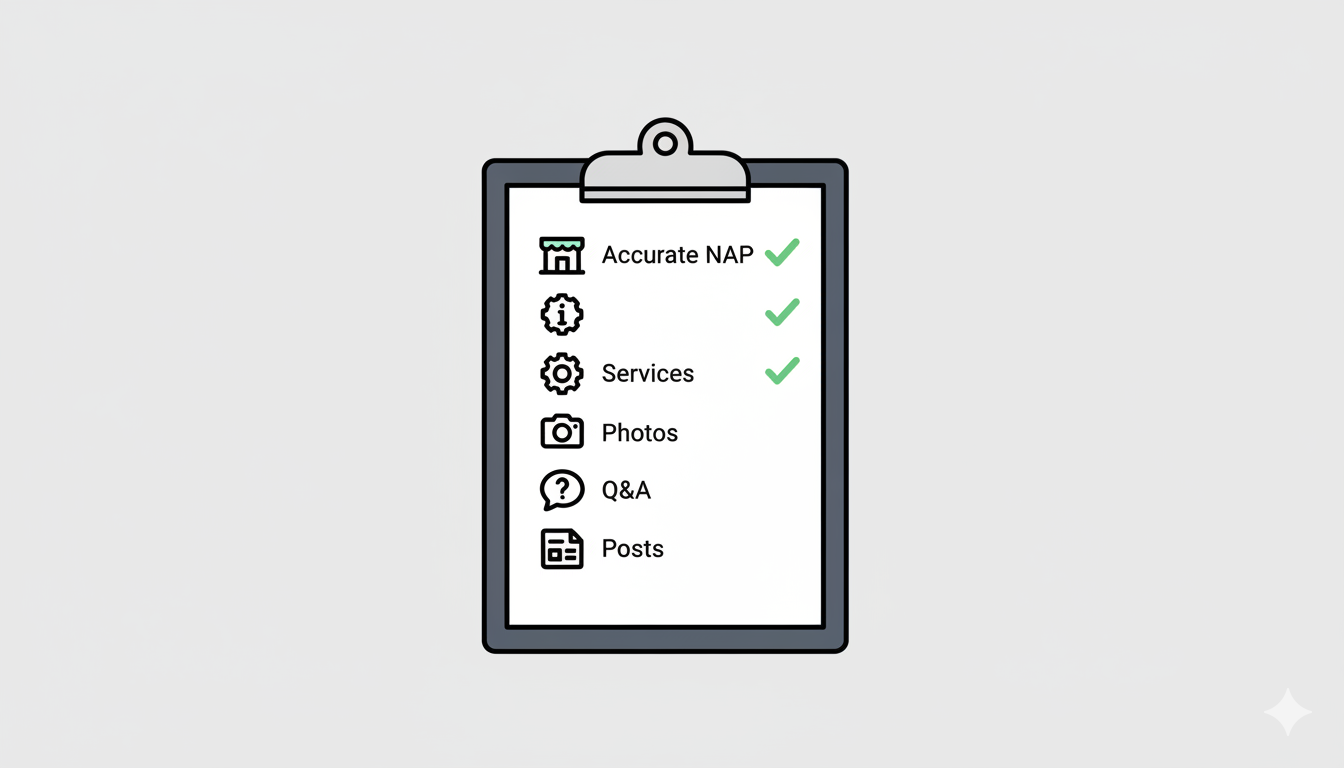
- Verify the profile. Google says verification shows you are authorised to represent the business, which makes it more likely to appear in results.
- Keep NAP identical. Your name, address and phone number should match everywhere: profile, website, directories. Small variations create doubt about which record is correct. Tools such as Moz Local or BrightLocal can audit listings.
- Choose the right categories. Pick the primary category that best describes the core of the business, then add secondary ones that are true. Check what the businesses ranking above you use.
- List your services separately. A law firm should add “family law”, “wills and probate” and “commercial disputes” as separate services, each with a plain description.
- Add real photos. Photos of your premises, your team and your work show customers what to expect before they get in touch.
- Fill in hours and attributes. Update hours for bank holidays and add details such as step-free access or parking.
- Post updates and answer questions. Regular posts keep the profile current, and answering common questions yourself stops guesswork from filling the space.
Beyond the profile, give your website a page for each location or service area, with the address, an embedded map and unique copy. For shops, trades and restaurants, see our local business marketing approach. Add LocalBusiness structured data and check it with Google’s Rich Results Test.
Common mistakes with the profile
The usual errors are out-of-date opening hours, a different phone number on the website, and a category chosen because it sounded impressive rather than accurate. Each one sends mixed signals about who you are and when you are open.
Pillar 2: Prominence and your reviews
Google describes prominence as how well known a business is, based partly on how many websites link to it and how many reviews it has. Reviews are the part you can influence fastest.
Ask for reviews, and reply to all of them. A steady flow of recent reviews matters more than one burst. Reviews that mention specific services also help Google match you to those searches. A calm, factual reply to a bad review shows future customers how you handle problems.
Ask in a follow-up email or text, or with a QR code at the counter. Do not pay or reward people for reviews. Google’s policy bans offering incentives such as payment, discounts or free goods in exchange for reviews, and incentivised reviews can be removed. Fake reviews carry the same risk.
Spread your reviews sensibly. Google matters most, but Trustpilot, Facebook and industry sites such as Checkatrade for trades also build trust with people who check more than one source.
Common mistakes with reviews
Ignoring negative reviews, replying defensively, and buying reviews are the three to avoid. The first two cost you customers who read the replies. The third can cost you the listing.
Pillar 3: Local authority and citations
A citation is any online mention of your business name, address and phone number. Listings in reputable directories, with details that match your profile, are a basic building block. In the UK, check sources such as Companies House, Yell and trade bodies in your sector.
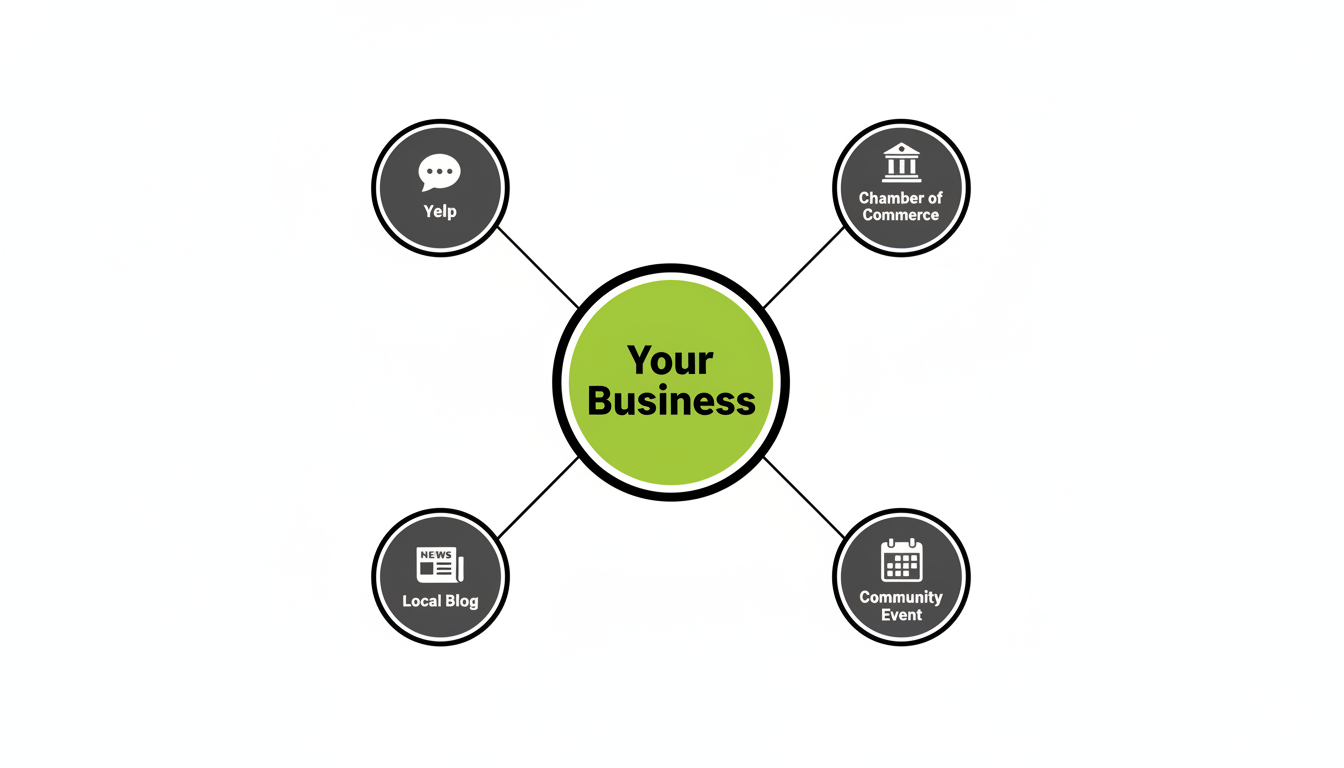
Local links. Links from other local sites tell Google that real people in your area know you exist. Good sources are a local charity you sponsor, a news story, a neighbouring business you partner with or a local association you join. In our analysis of top-ranking dentists, local links were a key difference between the practices that ranked and those that did not.
Create content that is genuinely local, such as a guide to your neighbourhood or a write-up of an event you took part in. It earns links without outreach.
Common mistakes with links
Links from irrelevant or low-quality sites do not help and can look manipulative. Choose a few relevant local links over a long list of directories nobody uses.
Local SEO tools
You do not need a large toolkit. These cover most small businesses:
- Google Business Profile: your profile, reviews and profile performance data.
- Google Search Console and Google Analytics: how local searches reach your website.
- Moz Local or BrightLocal: listing audits and review monitoring.
- Semrush or Ahrefs: competitor and keyword research.
- Google Keyword Planner: local search wording.
How do you measure local SEO success?
Measure local SEO by tracking calls, direction requests and website visits from your Google Business Profile, plus your ranking in the map results for your main searches. Add review count and rating, and enquiries that came through search. Compare each month against a baseline you set before you started.
Review the numbers every month and run a fuller audit twice a year. Rankings move with competitors, algorithm changes and your own edits, so look at the trend over several months rather than a single week.
Frequently asked questions
Most businesses see early movement within a few weeks of fixing their profile, categories and listings. Reaching the top of the Local Pack in a competitive area usually takes several months of steady work on reviews, links and website content. Google does not publish a timeline, so treat any fixed promise with caution.
Normal SEO aims to rank web pages for everyone, wherever they search. Local SEO aims to rank a business in a specific area, so it adds the Google Business Profile, reviews, citations and location pages. The two overlap, and a good website helps both, but local SEO adds place-based signals.
No. Service-area businesses such as plumbers and mobile hairdressers can also appear in local results. Google Business Profile has options for businesses that serve customers at their location. You still need accurate details, a verified profile and pages on your website for the areas you cover.
Yes. The basics are free: claim and verify your profile, complete every field, ask for reviews and fix your listings. An agency becomes useful when you have several locations, a competitive area or no time to keep it going. Start with the profile checklist above.
No. Google states that there is no way to request or pay for a better local ranking. Paid ads can sit alongside the map results, but they do not change where your free listing appears. Local ranking depends on relevance, distance and prominence.
Next step: get your local visibility checked
Open your Google Business Profile today and check it is verified, complete and accurate. If you would like a second opinion on where you stand against competitors, contact LineUp and we will review it with you.
Search, ads and video for businesses that want more customers. Every guide is based on what we see in client accounts. See our services