
The short version
- SparkToro shows who searches for your topic and which sites they read, so you plan content around people.
- It complements Ahrefs or Semrush and does not replace them.
- Paid plans start at $38 a month, billed annually, and the free plan allows 3 previews a month.
- Run five steps: define one audience, read the data, map opportunities, feed your SEO plan, then measure.
SparkToro helps with SEO by showing who searches for your topic, which sites they read and which keywords they favour, so you plan content around people and not only search volume. It does not replace Ahrefs or Semrush. It sits beside them and feeds your keyword, content and link building decisions.
This guide gives you a five-step process you can run in an afternoon. It also covers what the tool costs, where it falls short and how to measure whether it paid off.
Audience research means finding out what a defined group of people reads, watches, follows and searches for. SparkToro builds that picture from a sentence such as “independent bookshop owners in the UK”, and each report covers demographics, websites, podcasts, YouTube channels, Reddit communities and search keywords.
What does SparkToro do that keyword tools do not?
Keyword tools show what people type into Google and how often. SparkToro shows who those people are and where else they spend time. Its version 2 launch added search data, so you can see the sites, social accounts and demographics behind a keyword.
Content relevance
You see the topics and vocabulary your audience already uses. That keeps your pages close to what they care about, which tends to show up as better engagement.
Keywords that volume tools rank low
SparkToro lists terms by audience affinity, not by volume. Its own demo of the keyword report notes that a term with 305 searches a month can still be a strong match for a niche audience. Those are the phrases a volume-sorted list buries.
Competitor audiences
You compare your audience with a competitor’s and see what only they reach, and what you share.
Link building targets
The websites and publications report gives you a ready list of sites worth pitching, because your audience already reads them.
Where traditional SEO research falls short
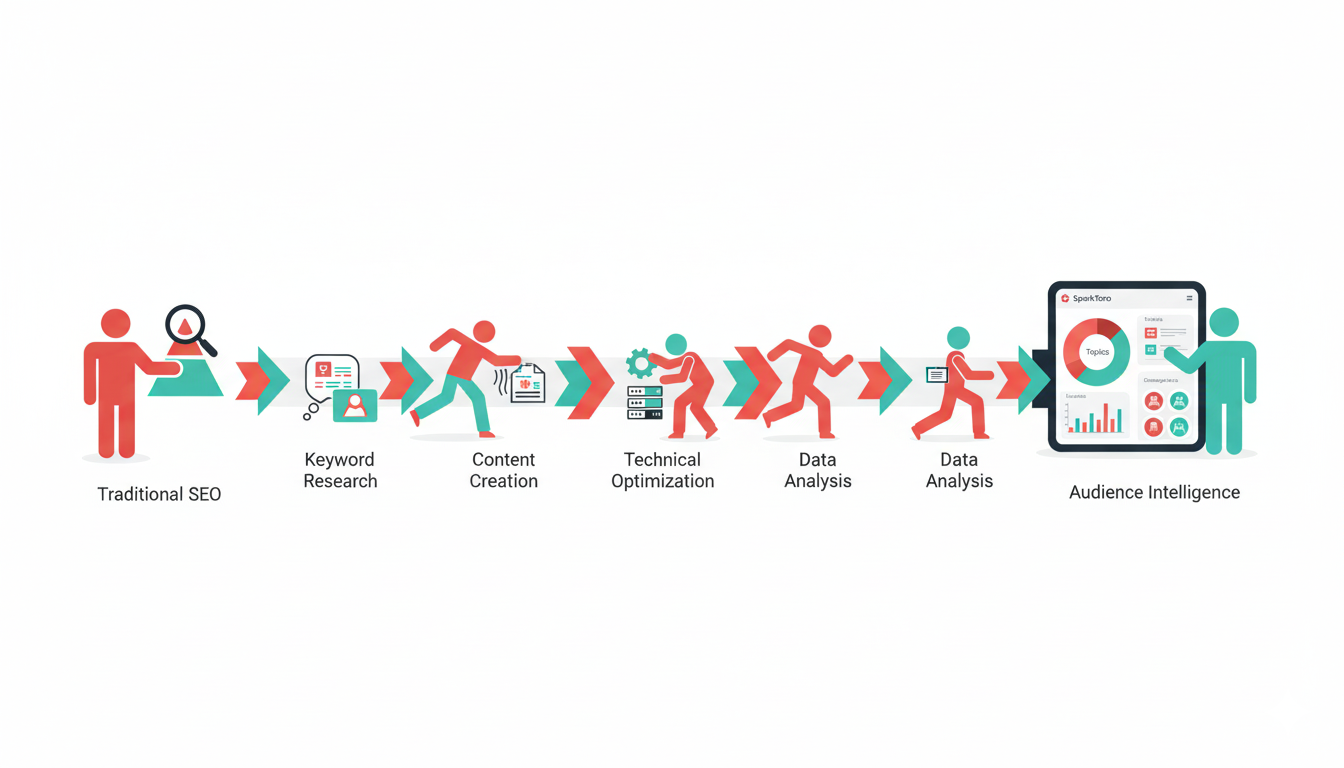
Keyword research tells you demand. It says little about the person behind the query, so two competitors can target the same phrase and write for completely different readers. Without an audience picture, you guess at tone, format and the sites worth earning links from.
| Traditional SEO Research | SparkToro-Enhanced SEO |
|---|---|
| Keyword volume without context | Keywords with audience understanding |
| Guessing at user intent | Knowing audience motivations |
| Competitor keyword analysis | Competitor audience analysis |
| Content based on search volume | Content based on audience needs |
| Generic outreach targets | Precise influencer identification |
Not sure where you rank?
We’ll check your map position, your Google profile and your listings, and send you what to fix first. Free, no obligation.
How much does SparkToro cost?
SparkToro has a free plan with 3 previews a month. Paid plans start at $38 a month for Personal, billed annually, which includes 4 reports a month. Business is $150 a month for 25 reports and 10 users. Agency is $300 a month for 250 reports and 100 users.
Check the official pricing page before you budget, because plans change. For one site, the free plan is enough to test the method and Personal is enough to run it monthly.
Show the numbers
| Personal | $38 |
| Business | $150 |
| Agency | $300 |
Step-by-step SparkToro framework for SEO
Step 1: Set up and define one audience
Create an account on the free plan and write down the one audience you want to reach first. Be specific. “Facilities managers at UK manufacturers” gives a far better report than “business owners”.
- Pick one customer segment per report
- Describe it in a sentence, including job, sector and location
- Save the report so you can compare it next quarter
Step 2: Read demographics and behaviour
Open the report and note age, seniority, company size, location and the social networks your audience uses. This decides which formats to make and which channels to promote them on.

- Demographics: age, gender, seniority, company size, location
- Interests: the topics and communities they follow
- Channels: networks, podcasts, YouTube channels and subreddits
Step 3: Map content and link opportunities
Go to the websites, press and podcasts sections. Each one is a list of places your audience pays attention to, ranked by how many of them use it. Add the best ones to a list and export it.

- Content gaps: compare what your audience reads with what you publish
- Link targets: sites and publications worth a pitch or a guest article
- Formats: note whether they favour video, long articles or podcasts
Step 4: Feed the findings into your SEO plan
Take the search keywords report and add the terms to your keyword list, then check volume and difficulty in your usual SEO tool. Group the terms into topic clusters and give each cluster a page. If you need help turning this into a plan, our SEO services cover exactly this.
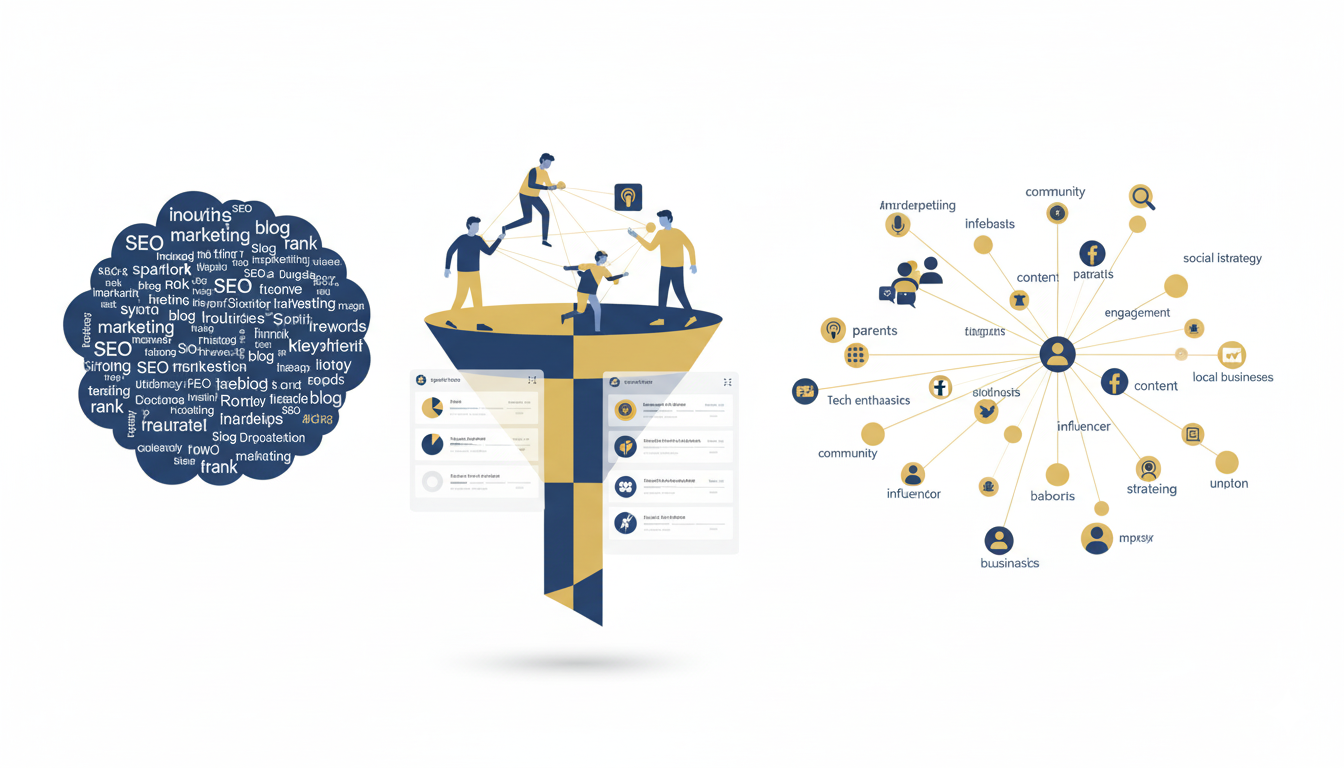
- Keyword expansion: add audience terms your tools missed
- Topic clusters: one page per audience interest, linked together
- Outreach list: pitch the sites from Step 3 with content built for their readers
From our work: When we plan SEO for local and service businesses, the biggest early gains come from matching pages to how customers actually describe the problem, not from the broadest keyword. Our guide to local SEO shows how that plays out for a business with a physical location.
Step 5: Measure and repeat
Compare pages built from SparkToro findings with pages built the usual way. Use Google Search Console for impressions, clicks and average position, and your analytics tool for engagement and conversions.

- Search performance: clicks and rankings for audience-led terms
- Engagement: time on page and pages per session
- Conversions: enquiries from audience-led pages against generic ones
Which SparkToro features matter most for SEO?
The search keywords report, the websites and press reports, and the comparison search matter most for SEO. They give you audience-led keywords, sites to earn links from, and the gaps between your audience and a competitor’s. Social and demographic data support the rest.
Competitor audience analysis
Instead of only comparing keywords, compare the people each brand reaches. Differences show you which audiences a competitor ignores.

Content gap identification
The report lists topics and formats your audience consumes. If none of them appear on your site, you have found a gap worth filling.
Influencer and partnership targets
Use the social accounts and podcasts reports to find voices that reach your exact audience. Good link building starts with relevance, and these lists are relevant by construction. For AI search, see how this fits with AI SEO.
Common mistakes to avoid
Measuring SEO success with SparkToro
Alongside rankings and traffic, track the signals that show whether audience research is changing outcomes:
| Metric | Why It Matters | SparkToro Connection |
|---|---|---|
| Audience-Aligned Keyword Rankings | Rankings for terms your audience actually uses | Direct correlation with audience language patterns |
| Engagement Depth | Time on page, scroll depth, interaction rates | Content resonates with actual audience interests |
| Conversion Rate by Audience Segment | How well different audience segments convert | Targeted content performs better with specific audiences |
| Content Amplification | Social shares, backlinks from audience-followed sources | Content appeals to audience networks and influencers |
Frequently asked questions
It is worth it if you publish content or build links and want to know who you are writing for. The free plan allows 3 previews a month, so you can test it before paying. If you only need rank tracking or site audits, a different tool will serve you better.
No. SparkToro says version 2 is not a comprehensive SEO tool and will not replace Ahrefs, Semrush or Moz. It tells you who your audience is and what they search for. You still need other tools for rankings, crawling, backlinks and exact keyword difficulty.
SparkToro’s own keyword research video states that search volume, history and cost per click come from Google’s ads tool. Its audience affinity scores come from its own panel of data. Treat the volumes as estimates and check important terms in your usual keyword tool.
Review your core audience reports every quarter, and check fast-moving segments every month. Audiences change their networks, publications and search terms over time. Saving each report lets you compare changes between runs and see which new topics or sites have appeared.
No. SparkToro describes audiences across the wider web, while Google Analytics shows what visitors do on your own site. Use SparkToro to decide what to build and where to promote it, then use Analytics and Search Console to judge whether it worked.
Get help with audience-led SEO
If you would rather have a team run this process and turn it into pages that rank, talk to LineUp. We will look at your audience, your current content and where search can bring you customers.

Search, ads and video for businesses that want more customers. Every guide is based on what we see in client accounts. See our services