The short version
- Complete your Company Page, then post useful content three to five times a week.
- Get employees and executives sharing so your reach goes beyond your followers.
- Thought Leader Ads promote a person's post and work with Brand Awareness, Engagement and Video View objectives.
- Measure reach, followers and branded search against a baseline taken before you start.
To build LinkedIn brand awareness, complete your Company Page, post useful content three to five times a week, get employees and executives sharing it, and put paid budget behind your best personal posts with Thought Leader Ads. Then measure reach, followers and branded search against a baseline, not just likes.
LinkedIn describes itself as the world’s largest professional network, with more than 1 billion members in more than 200 countries and territories. That is a large pool of buyers, but it also means your posts compete with a lot of noise. This guide covers the steps that move recognition among the people who actually buy from you.
What is LinkedIn brand awareness and why does it matter for B2B?
LinkedIn brand awareness is how well your target buyers recognise and recall your company when they see it on LinkedIn. It is measured by reach, impressions, follower growth and branded search, and it shapes whether prospects shortlist you before they ever speak to sales.
B2B purchases usually involve several people. If one of them says “should we look at Company X?” and another replies “I know them, they post good material on LinkedIn”, you have done the job. Awareness does not close deals by itself, but it makes every later email, ad and sales call easier.
Reach decision-makers directly
LinkedIn lets you target by job title, seniority, industry and company size, so your content can reach managers and executives with buying influence without paying for wasted impressions.
Build authority with consistent content
Useful, specific posts show prospects how you think. Over months, that builds trust that a one-off campaign cannot.
Reach the whole buying committee
Several people from one target account seeing your name in different places is worth more than one person seeing it five times.
How do you set up your LinkedIn presence for brand awareness?
Start with a complete Company Page: logo, cover image, a clear “About” section written for your buyer, your website URL and a tagline that says what you do. Then update the personal profiles of executives and sales staff, because people often look at them before the Page.
Company Page checklist
- Logo and cover image: use clean, professional visuals that match your website
- “About” section: say who you help and what you do in plain words, with the search terms buyers use
- Website URL and contact details: make it easy to reach you outside LinkedIn
- Showcase Pages: useful for larger firms with separate products or business units
- Fresh content: a Page with no posts for months looks abandoned
Personal profile optimisation
Executives and customer-facing staff carry much of your brand presence. Their profiles often rank well in LinkedIn and Google results, so treat them as part of your marketing.

- Headline: go beyond the job title and say who you help and how
- Featured section: pin your best article, case study or talk
- Experience: describe results, not just responsibilities
- Skills and recommendations: third-party validation adds credibility
Not sure where you rank?
We’ll check your map position, your Google profile and your listings, and send you what to fix first. Free, no obligation.
What content builds brand awareness on LinkedIn?
Content that helps your buyer do their job better builds awareness fastest: practical how-tos, short analyses of your industry, honest lessons from projects, and customer stories. Mix formats so the feed does not see the same post type every day, and keep promotion to a small share.
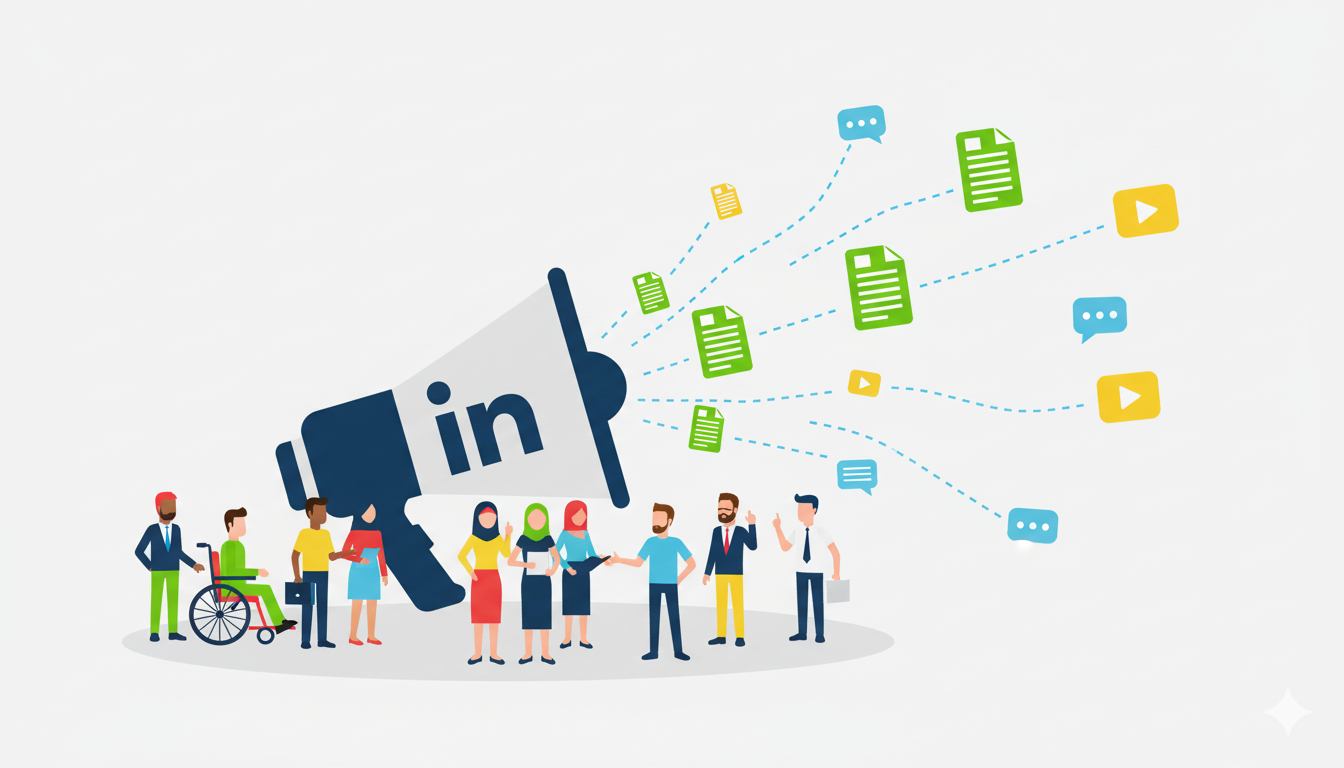
Educational posts: share how-tos, checklists and short industry analysis. This is the base of your content plan.
Behind-the-scenes posts: show your team, your process and how you work. These humanise a company that might otherwise look like a logo.
Visual posts: images, carousels and short video break up a text-heavy feed. Keep text on images readable on a phone.
Customer stories: explain a problem, what was done and what changed. Only name a client with their permission.
Content calendar and posting rhythm
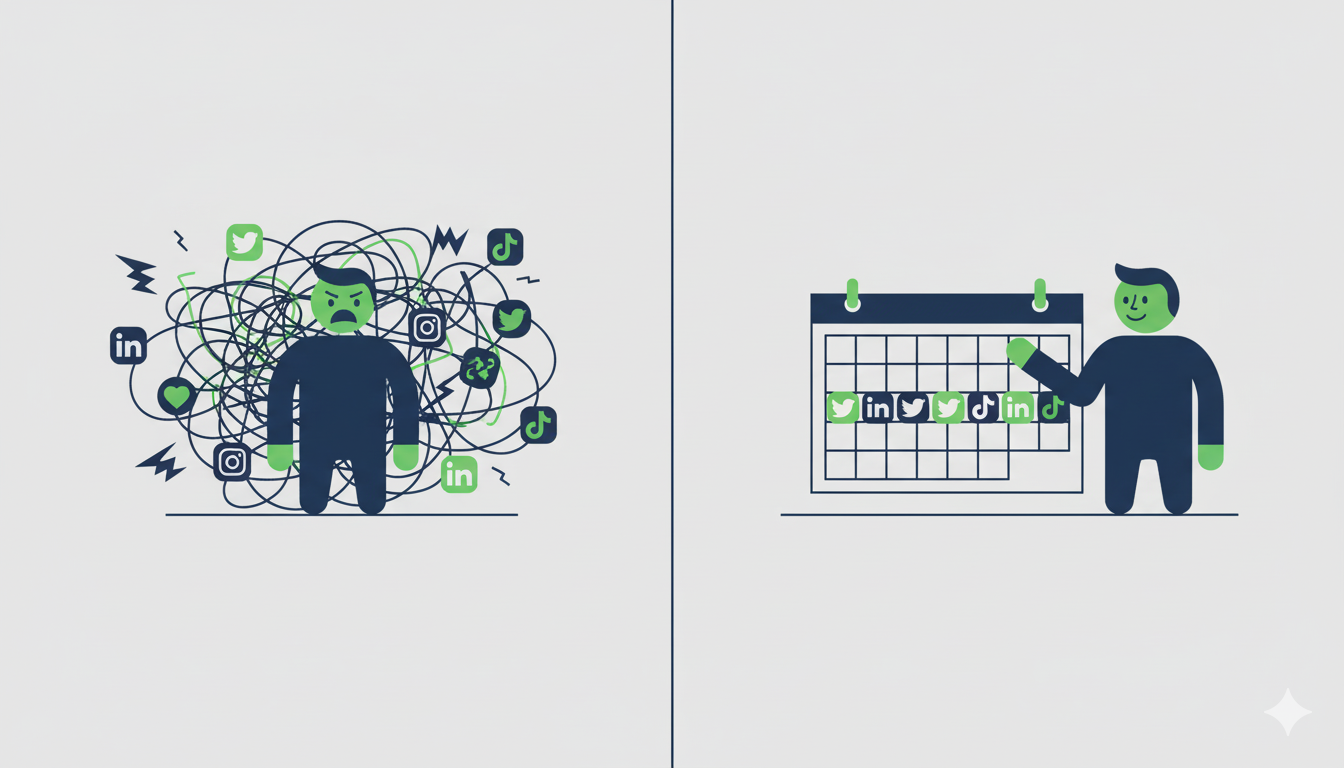
Consistency matters more than volume. A simple calendar stops you posting in bursts and then going silent.
- Frequency: three to five posts a week is a realistic rhythm for most B2B teams
- Timing: test weekday mornings in your buyers’ time zone, then keep what your own analytics support
- Mix: aim for mostly educational posts, some engagement posts, and a small share of promotion
- Hashtags: use a few relevant ones, not a long list
From our work: When we plan B2B social content, the posts that tend to hold up are those written from a real question a client’s customers ask, not from a product announcement. We build the calendar around those questions first and add company news only where it helps the reader. Our social media management and content marketing work follows that approach.
What are LinkedIn Thought Leader Ads?
Thought Leader Ads are sponsored posts that promote an individual’s organic LinkedIn post, such as an executive’s or specialist’s, instead of a Company Page post. They appear in the feed as that person’s post, with a sponsored label, and the author must approve the promotion first.
The format works because people respond to a named person more readily than to a brand logo. You keep the reach and targeting of paid media but start from content that already reads as human.
How do you set up Thought Leader Ads?
Open Campaign Manager, choose a supported objective, pick the post format, request permission from the post’s author, set your audience and budget, then launch. LinkedIn states that Thought Leader Ads work with the Brand Awareness, Engagement and Video View objectives.
- Choose the objective. Brand Awareness, Engagement or Video View.
- Choose the format. Select “Single image ad”, or “Video ad” if the post you plan to promote includes a video.
- Request permission. Search for an employee linked to your Company Page, find the post and request approval in Campaign Manager. The author is notified and can approve or deny.
- Define the audience. Target by industry, job title, company size or other criteria that match your ideal customer.
- Set budget and launch. Review results against your goal after a few weeks and adjust.
Best practices for Thought Leader Ads
- Pick credible voices: choose people with a real point of view and a track record of useful posts
- Promote what already works: boost posts that have performed well organically
- Keep it personal: do not polish the post until it sounds like a press release
- Tie it to a goal: match the post to what you want buyers to remember
If you want help running paid LinkedIn campaigns, see our guide to LinkedIn Ads agency costs in the UK.
How does employee advocacy increase LinkedIn reach?
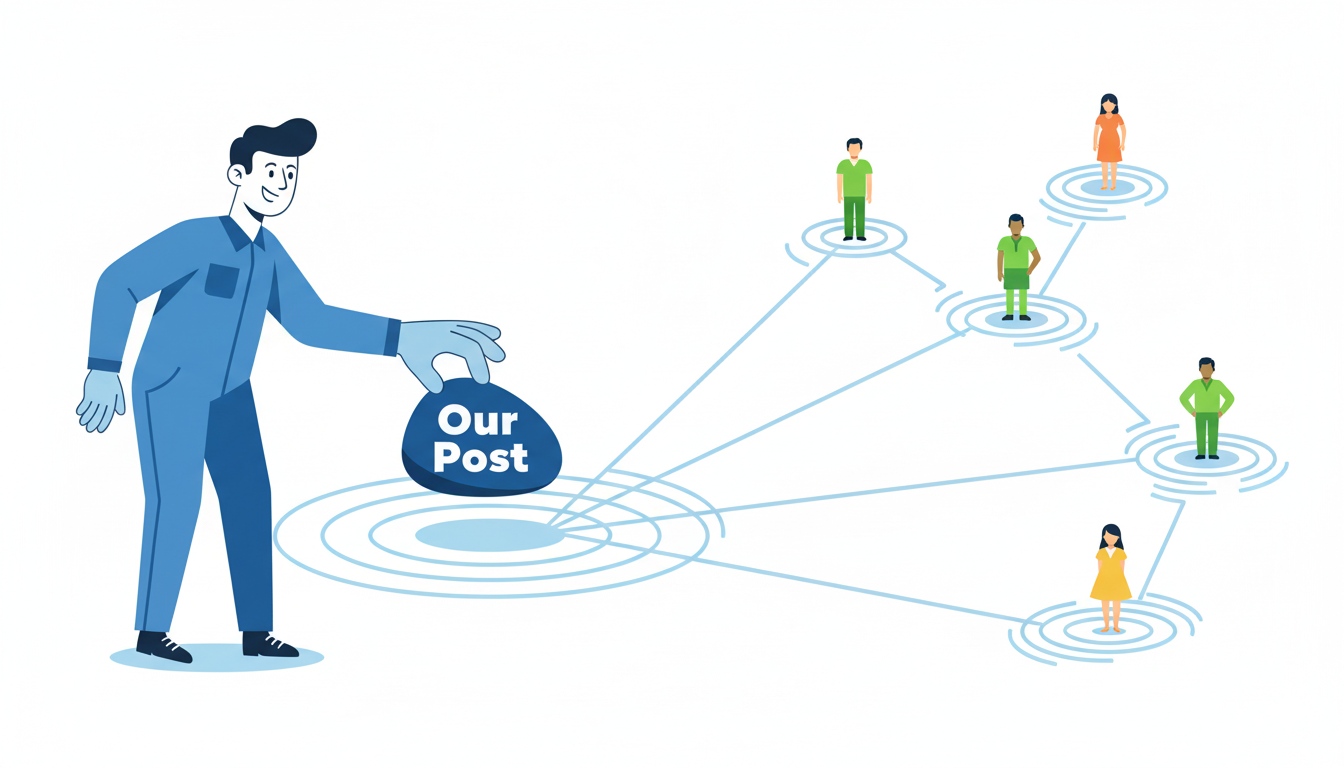
Employee advocacy increases reach because staff share your content to their own networks, which are usually far larger in total than your Company Page’s followers. It works when sharing is easy, voluntary and guided, so people post in their own words.

Building an advocacy programme
Provide shareable content: keep a shared library of posts, images and suggested angles, and let staff edit the wording.
Offer short training: explain how to write a post, what to avoid and what your social media guidelines say.
Recognise participation: thank active advocates publicly or internally.
Lead from the top: if executives do not post, nobody else will.
Measuring advocacy
- Reach and impressions from employee shares
- Engagement on employee posts compared with the Company Page
- Website visits from employee profiles
- Leads that mention an employee’s post
How do you build engagement and community on LinkedIn?
Respond to every comment on your posts, comment usefully on posts from customers, partners and industry voices, and ask questions that invite a real answer. Engagement builds recognition because each comment puts your name in front of someone else’s audience.

Strategic engagement
Reply to comments: a thoughtful reply encourages a second comment and shows the audience you read them.
Join relevant conversations: follow a handful of industry hashtags and add something specific.
Comment on others’ posts: engage with partners, publications and customers without pitching.
Ask real questions: a question you actually want answered gets better replies than a generic prompt.
LinkedIn Groups
Groups can still work for niche audiences if the discussion is active. Join where your buyers talk, answer questions first, and share your own content only when it fits. Creating your own group makes sense only if you can moderate it every week.
How do you measure LinkedIn brand awareness?
Measure brand awareness with reach, impressions, follower growth, engagement rate, profile and Page visits, and branded search volume. Record a baseline before you start, then compare monthly or quarterly. Awareness changes slowly, so judge the trend over several months, not the result of any single post or week.

Key metrics
These are the core numbers to track for awareness:
| Metric | What It Measures | Why It Matters |
|---|---|---|
| Impressions | How many times your content was displayed | Indicates overall visibility and reach |
| Follower Growth | Rate of new followers acquiring | Shows increasing audience interest |
| Engagement Rate | Percentage of engaged impressions | Measures content resonance and quality |
| Share of Voice | Your brand mentions vs. competitors | Indicates market position and mindshare |
| Website Referrals | Traffic from LinkedIn to your website | Shows interest beyond the platform |
| Content Amplification | How often your content is shared | Measures audience advocacy and content value |
Beyond the dashboard
Branded search: watch whether more people search your company name in Google Search Console after campaigns.
Lead source questions: add “How did you first hear about us?” to forms and sales calls, and record LinkedIn mentions.
Sentiment: read comments and mentions to see how people describe you, not just how many see you.
Competitor comparison: note how often competitors post and what gets engagement.
How do backlinks and PR support LinkedIn brand awareness?
Press mentions, guest articles and links from respected industry sites give your brand credibility that LinkedIn followers can verify with a quick search. Sharing that coverage on LinkedIn adds proof to your posts. Our link building work often supports this brand-awareness effort.
Frequently asked questions
Impressions and engagement can improve within a few weeks of posting consistently. Brand recognition that affects pipeline usually takes several months, because buyers need repeated exposure before they remember you. Review results quarterly against your baseline rather than judging each post.
Neither is better alone. Organic content builds trust and a base of followers, while paid promotion extends reach to buyers who do not follow you. Most B2B companies do best by promoting their strongest organic posts, for example through Thought Leader Ads, to a defined target audience.
Three to five posts a week is a sensible target for most B2B companies. It keeps you visible without exhausting your team. If you can only keep up two good posts a week, do that: quality and regularity matter more than volume.
Yes. Organic activity costs time, not media spend. Complete your Page, post useful content weekly, encourage staff to share, and comment on posts from your target customers. Add a small paid test later, once you know which posts already get a response.
Compare reach, follower growth and branded search against your baseline, then look for movement in website visits from LinkedIn, lead quality and the number of leads who mention LinkedIn. Direct attribution is limited for awareness work, so use several signals together and review them over a quarter, not a week.
Get help with LinkedIn brand awareness
If you want a plan for your Company Page, content and paid LinkedIn campaigns, contact LineUp and tell us who your buyers are. We will suggest a practical starting point.
Search, ads and video for businesses that want more customers. Every guide is based on what we see in client accounts. See our services