Social Media for Estate Agents: What Works in 2026
Social Media for Estate Agents in the UK requires a pivot away from generic "Just Listed" photo posts toward hyper-local, short-form video content. In 2026, successful independent agencies generate local brand awareness organically through TikTok and Instagram Reels by offering behind-the-scenes property tours and market updates. Concurrently, they use Facebook Paid Advertising to run data-driven, lead-generation campaigns (such as digital instant valuations) targeting specific home-owning demographics to acquire exclusive vendor instructions.
 Ekrem Abdulkerim
Updated 08/09/2026
9 min read
Ekrem Abdulkerim
Updated 08/09/2026
9 min read
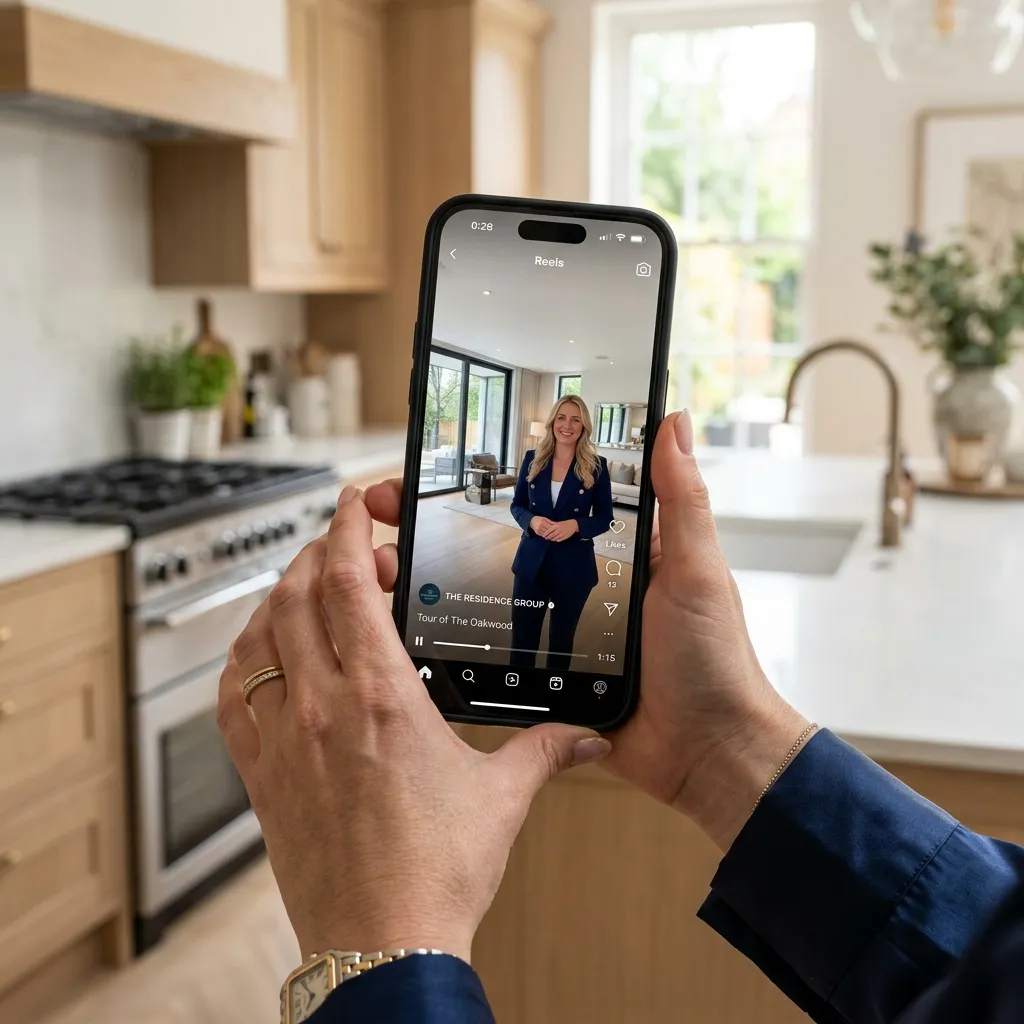
If you look at the Facebook page of an average UK estate agency, it is a digital graveyard. It consists of automated feeds from their CRM posting static photos of houses with captions like: “New to market! 3 bed semi. Call us to view.” These posts receive zero likes, zero comments, and generate zero leads.
Homeowners do not go onto social media to search for a house; they go onto Rightmove for that. People use social media to be entertained, educated, or distracted. If your agency’s social media strategy is purely promotional, you are invisible to the algorithms.
In this guide, we break down exactly how modern UK estate agencies are using TikTok, Instagram, and Facebook to build massive local audiences and convert those followers into high-value property valuations.
1. Why Most Estate Agent Social Media Fails
The primary reason estate agents fail on social media is the “Broadcasting” mindset. They treat a Facebook page like a digital billboard. They broadcast their listings, they broadcast their achievements (“We won an ESTAS award!”), but they provide zero value to the end user.
To win on social media, you must shift to the “Media Company” mindset. You are no longer just an estate agent; you are the premier digital broadcasting network for your town. Your content must answer the questions local people actually care about: “Are house prices falling in our area?”, “What is the best school catchment zone?”, “What is it like inside that £2 million mansion on the hill?”
2. TikTok: The New Engine for Local Brand Awareness
Many agents dismiss TikTok as an app for teenagers. This is a fatal strategic error. In 2026, TikTok’s largest growth demographic is users aged 25-45 (first-time buyers and second-steppers). Because TikTok’s algorithm is entirely content-driven (not follower-driven), an estate agent with 0 followers can post a high-quality video of a local property and generate 50,000 views in 24 hours.
The Strategy: Fast-paced, hyper-visual property tours. Do not use slow, boring drone footage with classical music. Use trending audio. Start the video outside the front door, use fast cuts to walk through the most impressive rooms (the kitchen, the master ensuite), and keep the entire video under 30 seconds. Put the price and the location as text overlays in the first 3 seconds to hook the viewer.
3. Instagram Reels: Highlighting High-End Properties
If TikTok is for fast viral reach, Instagram is your digital storefront. Instagram is where high-net-worth individuals and aspirational buyers spend their time. Static grid posts are essentially dead; your entire Instagram strategy must revolve around Instagram Reels.
For high-end or unique properties, create cinematic “cinematic lifestyle” Reels. If the property has a massive garden, film a 10-second Reel of a dog running across the grass on a sunny day. If it has a luxury kitchen, film a close-up of an espresso machine pouring coffee. You are selling the dream of living in the property, not just the physical structure.
More in this series
4. Facebook Ads: The Ultimate Vendor Generation Tool
Organic Facebook reach is practically zero. If you post on your business page, less than 2% of your followers will see it. Facebook is now purely a “Pay-to-Play” platform, but its advertising infrastructure is the most powerful vendor generation tool in existence.
Route the click to an automated valuation tool (like ValPal). The user inputs their address and contact details to get the instant estimate, and your sales team instantly calls them to offer a firm, in-person valuation.
5. The “Day in the Life” Content Strategy
People do business with people. Faceless corporate accounts do not perform well on modern social media. The most successful agencies make their staff the stars of the show.
Film a “Day in the Life of a London Estate Agent” Reel. Show the agent getting their morning coffee, walking to a valuation, conducting a viewing, and negotiating an offer. This humanizes your agency, builds immense trust, and shows potential vendors exactly how hard you work behind the scenes to sell a property.
6. Showcasing Sold Prices (The Proof is in the Data)
When you sell a property above the asking price, a simple “SOLD” graphic is not enough. You must tell the story of the sale to prove your competence.
Create a short video or carousel post: “How we sold 12 Acacia Avenue for 10% over asking.” Detail the strategy: “This property was stuck on the market with another agent for 6 months. We took over, restaged the living room, launched a targeted Facebook Ad campaign, generated 14 viewings in the first weekend, and secured multiple offers.” This is the exact data a vendor wants to see before instructing you.
7. LinkedIn for Commercial Property and B2B Networking
If your agency deals in commercial property, high-end developments, or land acquisition, TikTok is the wrong platform. You must live on LinkedIn.
On LinkedIn, post long-form analysis of local property yields, planning permission changes, and economic shifts in your county. Connect with local property developers, mortgage brokers, and solicitors. A strong LinkedIn presence positions the agency director as a thought leader, which is crucial for winning high-value commercial instructions.
8. Community Engagement: Don’t Just Broadcast
The algorithm rewards accounts that keep users on the platform. If you just post and log off, your reach will be penalized. You must actively engage with your local community.
Spend 15 minutes a day commenting on the posts of local businesses (cafes, gyms, schools) in your town. If a local bakery posts a picture of a new cake, comment from your agency account: “Looks amazing! Our team will definitely be down to try this on Friday.” This creates micro-impressions of your brand across the local digital ecosystem.
9. Structuring a Weekly Social Media Calendar
Consistency is more important than viral hits. Establish a rigid, executable weekly calendar that your team can actually maintain:
- Monday: “Market Update” Video (1 minute Reel/TikTok explaining local price shifts).
- Wednesday: “Property Tour” Video (Fast-paced walkthrough of a new instruction).
- Friday: “Sold Story” (Carousel post explaining how you achieved a great result for a vendor).
- Weekend: Community post (Highlighting a local business or event).
10. The Equipment You Actually Need (Hint: Just an iPhone)
Many agents refuse to start video marketing because they think they need a £2,000 DSLR camera and a professional videographer. This is false. Highly polished, corporate videos actually perform worse on platforms like TikTok because they look like TV commercials.
All you need is a modern smartphone (iPhone 13 or newer), a £20 wireless lapel microphone (like the DJI Mic or a cheap Amazon alternative) to ensure the audio is crisp, and a £15 ring light for days when the weather is miserable. Authentic, slightly raw footage builds more trust than hyper-edited corporate videos.
11. Measuring Social ROI: Clicks vs. Vanity Metrics
Do not report to your agency director that a video got “10,000 views.” Views do not pay the rent. You must track the Return on Investment (ROI).
Use tracking links (UTM parameters) or Linktree in your social media bios. At the end of the month, look at your Google Analytics to see exactly how many people clicked the link in your Instagram bio, landed on your website, and subsequently filled out a valuation request form. That is the true metric of social media success.
More in this series
12. Automation and Scheduling Tools
Managing three different platforms manually is a recipe for burnout. Utilize social media scheduling tools like Buffer, Hootsuite, or Later. These tools allow you to batch-create your content on a Monday morning and schedule it to automatically post across Facebook, Instagram, and LinkedIn throughout the week, freeing your team to focus on actual estate agency work.
13. Dealing with Negative Comments
Estate agents frequently receive negative comments (often about high fees or the housing crisis). Do not delete them unless they are abusive; deleting comments looks suspicious. Instead, reply professionally and transparently. If someone complains about fees, reply: “We understand moving is expensive. That’s why we focus on achieving 3-5% higher sale prices for our vendors than the local average, which more than covers our fee. We’d love to show you our data.”
14. Converting Followers into Valuations
A follower is useless until they become a lead. Every single piece of content you produce must have a low-friction Call to Action (CTA) that moves the user off the social platform and into your CRM. Do not just say “Call us.” Say: “Curious how this recent sale affects the value of your home? Click the link in our bio for an instant, free digital valuation in under 60 seconds.”
15. Retargeting Social Traffic
Most users will not convert on their first interaction with your brand on social media. They might watch 15 seconds of your property tour on TikTok and then keep scrolling. This is where the power of the Meta Pixel becomes indispensable.
By installing the Pixel on your agency website, you can track anyone who clicked a link from your organic Instagram or TikTok profile. You can then run highly specific, low-cost retargeting ads on Facebook. For instance, if someone clicked a link to read an article on “Bromley House Prices”, your retargeting ad will show up in their Facebook feed the next day saying: “Thinking of selling in Bromley? Get a free valuation today.” This multi-touchpoint strategy is how top-tier agencies convert passive social media scrolling into hard pipeline revenue.
Automate Your Vendor Lead Generation At LineUp Agency, we build automated paid social funnels for independent UK estate agents. Stop wasting time posting static photos to an empty Facebook page. Let us build the paid advertising infrastructure that guarantees valuation requests.
Viral Architecture
This guide is engineered from LineUp Agency’s analysis of the fastest-growing property accounts in the UK. We outline the exact content pillars, video formats, and paid funnel structures required to monetize a local social media following.
16. Sources & References
The social media algorithms and campaign structures discussed in this guide are validated against the following resources:
- TikTok for Business UK — Official documentation on algorithmic reach and localized advertising parameters for service businesses. tiktok.com ↗
- Meta Business Help Centre — Guidelines on executing lead generation campaigns and Instant Form optimization for real estate.
- Property Academy Consumer Survey — Data detailing how modern UK home sellers utilize social media to research and select their estate agent.
Ekrem Abdulkerim
SEO Strategist and Founder of LineUp. I help brands dominate search through technical precision and measurable growth.
Stay Ahead of the Curve
Get the latest SEO strategies and marketing insights delivered to your inbox.
Ready to win more instructions?
See how LineUp helps estate agents and property developers own local search and turn it into valuations.