
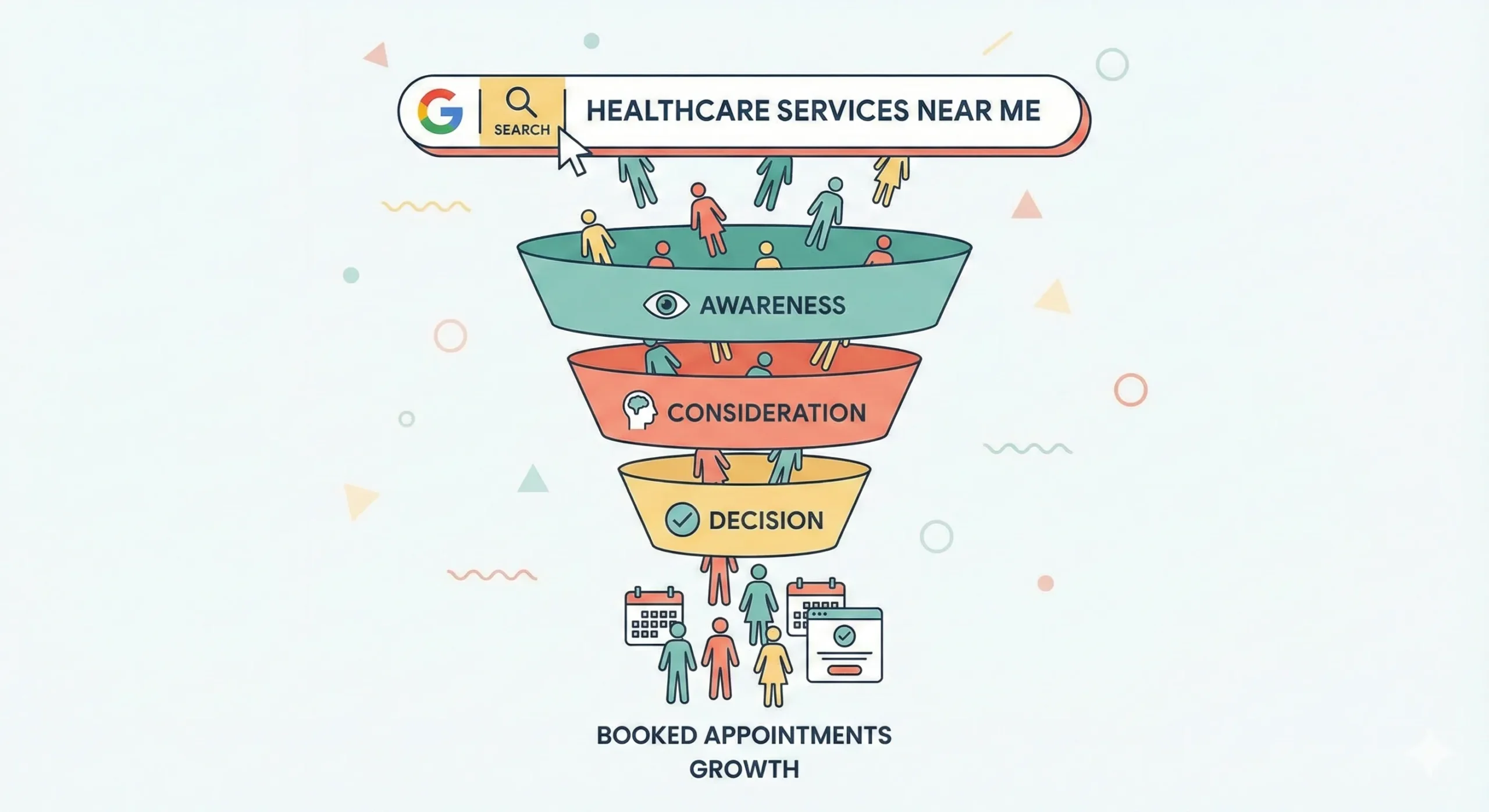
You’re investing in your website, running ads, and doing everything your marketing consultant suggested—yet your competitors seem to be booking patients effortlessly. Their phones ring. Their calendars fill up. And you’re left wondering what secret sauce they’ve discovered.
Here’s the uncomfortable truth: it’s not luck, and it’s not a bigger budget. Your competitors have built a private patient funnel that transforms casual Google searches into confirmed appointments. They’ve optimized every touchpoint in the patient journey, creating a seamless path that guides searchers toward booking—while your potential patients leak out at every stage.
In this comprehensive guide, we’ll dissect exactly why your competitors are capturing more click-throughs and, more importantly, how you can build a patient acquisition strategy that outperforms theirs. Whether you’re a dental practice, private clinic, or specialist consultant, these principles apply universally to anyone serious about converting patients from Google.
⚡ TL;DR — Key Takeaways
- Your competitors likely have a 2-3x higher click-through rate because they’ve optimized their Google presence with compelling meta titles, rich snippets, and trust signals
- A complete private patient funnel has 5 stages: Search → Click → Explore → Trust → Book—most practices fail at stages 2-4
- Healthcare click-through rate benchmarks show top performers achieve 8-12% CTR while average practices struggle at 2-3%
- Patient acquisition strategy depends on aligning search intent with your landing page experience—mismatch = lost patients
- Trust signals (reviews, credentials, photos) can increase conversion by up to 380% for medical practices
Why Your Competitors Are Winning the Click-Through Battle
Before we dive into solutions, let’s understand what’s actually happening when someone searches for a service you offer. Imagine a potential patient typing “private dentist near me” into Google. They’re presented with 10 organic results, 3-4 paid ads, a map pack with 3 local practices, and often featured snippets or “People Also Ask” sections.
That’s approximately 20+ options competing for one click. Your competitors aren’t winning by accident—they’ve engineered their listings to stand out in this crowded space.

The Click-Through Gap: Industry Statistics
According to Backlinko’s extensive CTR study, the difference between ranking positions is staggering. But here’s what most practice owners miss: position isn’t everything. A well-optimized listing in position 3 can outperform a poorly optimized listing in position 1.
🎯 The Real Competitive Advantage
Your competitors have likely invested in making their search listings irresistible. They’ve crafted meta titles with emotional triggers, added star ratings through review schema, included pricing transparency, and created meta descriptions that address specific patient pain points. This is medical practice marketing at its most effective—subtle, strategic, and patient-focused.
The practices dominating your local search results have typically worked with specialists who understand how to convert patients from Google—not just rank for keywords. There’s a critical difference between visibility and conversion, and that difference is costing you patients every single day. Understanding the real costs of dental marketing helps contextualize this investment.
Understanding the Private Patient Funnel Framework
The private patient funnel is the complete journey from initial Google search to booked appointment. Unlike traditional marketing funnels, healthcare funnels must account for the high-stakes nature of medical decisions. Patients aren’t buying a product—they’re entrusting their health to you.
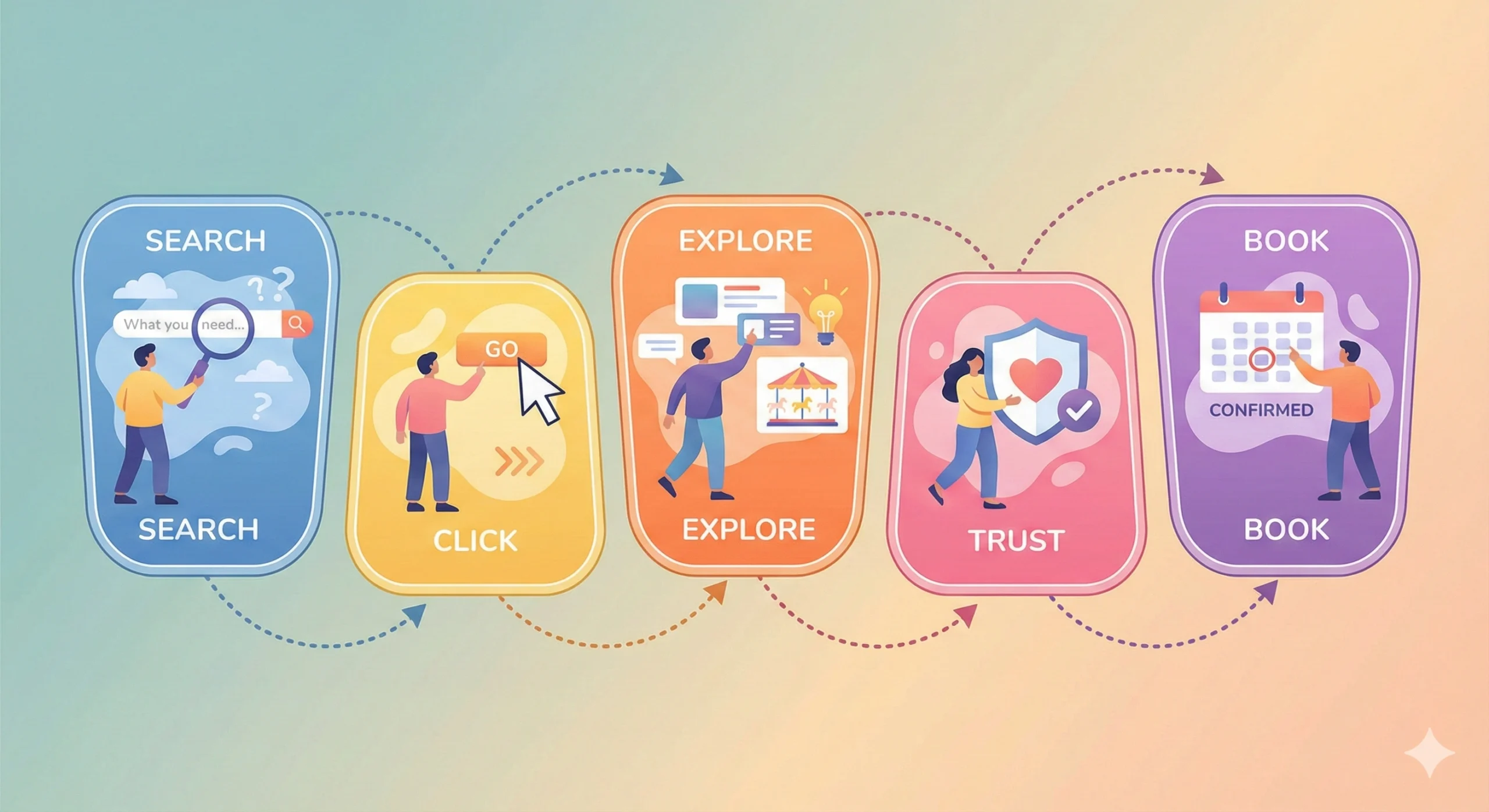
The 5 Stages of Patient Conversion
SEARCH — Intent Recognition
The patient has a problem or need and turns to Google. Your visibility here depends on SEO, local optimization, and ad targeting. Most practices focus exclusively here, which is a mistake—visibility without conversion is wasted traffic.
CLICK — First Impression
Your search listing competes with 9+ alternatives. The meta title, description, star ratings, and any rich snippets determine whether you win this micro-moment. This is where healthcare click-through rate optimization pays dividends.
EXPLORE — Website Experience
The patient lands on your site and begins evaluating. Within 3 seconds, they’ll decide whether to stay or bounce. Mobile responsiveness, loading speed, and immediate value proposition matter enormously at this stage.
TRUST — Credibility Building
Now the patient needs reassurance. They’re looking for social proof, credentials, before/after photos, transparent pricing, and authentic reviews. This stage separates practices that convert from those that don’t.
BOOK — Conversion Action
The patient is ready to act. Friction at this stage—complicated booking forms, no online scheduling, unclear next steps—costs you the patient. The path to booking must be obvious and effortless.
⚠️ Where Most Practices Fail
Research shows that 79% of healthcare websites lose potential patients between stages 2 and 4. They might rank well (Stage 1), but their listings don’t compel clicks, their websites don’t engage visitors, or their trust signals are weak or missing entirely. Understanding this private patient funnel is essential to diagnosing where your pipeline is breaking.
The 7 Click-Through Secrets Your Competitors Are Using
Let’s get specific. These are the exact tactics that high-performing medical practices use to dominate click-through rates. Each one contributes to a more compelling search presence and a stronger patient acquisition strategy.

1. Emotional Meta Titles That Trigger Action
Generic titles like “Dr. Smith’s Dental Practice | London” get ignored. High-performing practices use titles that address fears, desires, or specific needs:
| Weak Title (Low CTR) | Strong Title (High CTR) |
|---|---|
| Smith Dental Clinic — London | Nervous About the Dentist? Gentle Care at Smith Dental | London |
| Private GP Services | Same-Day GP Appointments — No Waiting Lists | [Location] |
| Cosmetic Surgery Clinic | Natural-Looking Results — See Our Before & After Gallery |
2. Review Schema for Star Ratings
Those gold stars you see in search results aren’t automatic—they require structured data markup. Practices displaying 4.5+ star ratings see 35% higher click-through rates according to BrightLocal research. This is non-negotiable for any serious patient acquisition strategy.
3. FAQ Schema for Featured Snippets
When you implement FAQ schema correctly, Google may display your questions and answers directly in search results. This massively increases your real estate on the search page and positions you as the authority. Useful free SEO tools can help you validate your schema implementation.
4. Compelling Meta Descriptions With CTAs
Your meta description is your 155-character sales pitch. Top performers include:
- Specific benefits (“pain-free treatment,” “same-day appointments”)
- Social proof snippets (“trusted by 2,500+ patients”)
- Clear calls-to-action (“Book your free consultation today”)
- Urgency elements (“Limited new patient slots available”)
5. Local Pack Optimization
The Google Map Pack (those 3 local listings with the map) captures about 42% of all clicks for local healthcare searches. Your competitors are obsessively managing their Google Business Profile with:
- Weekly photo updates
- Prompt responses to every review
- Regular Google Posts
- Complete attribute listings (accessibility, services, insurance)
- Q&A section management
6. Site Links Through Strong Site Architecture
When Google trusts your site structure, it displays additional links beneath your main listing—giving you more visual space and more click opportunities. This requires clear navigation, proper internal linking, and content organization that Google can easily understand.
7. Speed and Mobile Optimization Signals
Google now factors Core Web Vitals into rankings. Sites that load slowly or display poorly on mobile get penalized. Your competitors who invested in technical SEO are reaping the rewards through better positions AND higher click-through rates (fast-loading sites earn Google’s “fast loading” badge in some regions).
💡 Pro Tip: The Compound Effect
These seven tactics work synergistically. Implementing just 2-3 can improve your healthcare click-through rate by 40-60%. Implementing all seven creates a compound effect that can triple your organic click volume within 6 months. This is how smart practices approach medical practice marketing.
Building Trust Signals That Convert Skeptical Searchers
Once you’ve won the click, the battle shifts to your website. Healthcare decisions are inherently high-stakes, and modern patients are sophisticated researchers. They’ll verify your credentials, read your reviews, and scrutinize your site for red flags before ever picking up the phone.
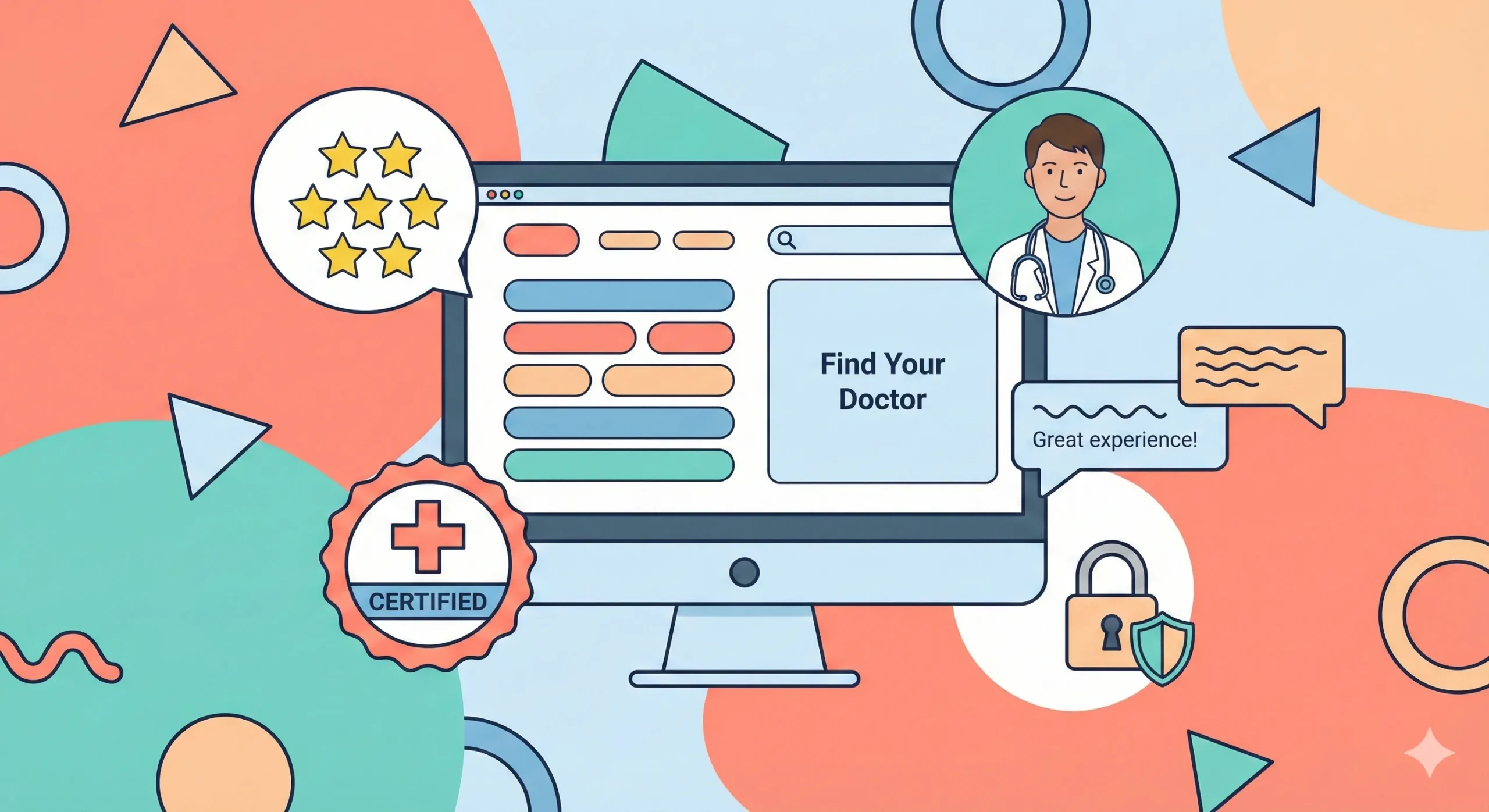
The Trust Hierarchy for Medical Practices
Not all trust signals carry equal weight. Based on patient survey data from PatientPop research, here’s how patients prioritize credibility indicators:
| Trust Signal | Patient Priority | Impact on Conversion |
|---|---|---|
| Online reviews (quality + quantity) | Very High | +380% when 50+ reviews |
| Professional credentials displayed | High | +125% |
| Before/after galleries | High (for relevant specialties) | +210% |
| Professional team photos | Medium-High | +95% |
| Transparent pricing | Medium-High | +85% |
| Video content | Medium | +75% |
| Industry awards/recognition | Medium | +45% |
Reviews: The Make-or-Break Factor
Let’s be direct: if you have fewer than 30 Google reviews with an average below 4.5 stars, you’re losing patients to competitors with stronger social proof. This is the single most impactful element of your private patient funnel outside of your actual clinical skills.
Review Optimization Checklist
- Systematic post-appointment review request process
- Response to 100% of reviews within 24-48 hours
- Professional, empathetic responses to negative reviews
- Reviews embedded on relevant website pages
- Review schema markup for star display in search
- Diverse reviews across Google, Facebook, and industry-specific platforms
Transparency: The New Competitive Advantage
Modern patients expect transparency. Practices that hide pricing, use stock photos, or make vague promises are increasingly seen as suspicious. Your competitors who publish clear fee guides, show real team members, and explain processes openly are building trust that translates directly to bookings.
Step-by-Step: Optimizing Your Private Patient Funnel
Now let’s build your action plan. This step-by-step framework will help you systematically improve every stage of your patient acquisition strategy. Treat this as a 90-day project with measurable milestones.

Phase 1: Audit Your Current Performance (Week 1-2)
Before making changes, establish baselines. You can’t improve what you don’t measure:
- Google Search Console data: Current click-through rates by query and page
- Analytics review: Bounce rates, time on site, and user flow patterns
- Competitor analysis: How do their listings and websites compare?
- Review audit: Number of reviews, average rating, recency, and response status
- Technical audit: Site speed, mobile experience, Core Web Vitals scores
Phase 2: Quick Wins (Week 3-4)
Focus on high-impact, low-effort improvements first:
🚀 Immediate Actions
- Rewrite meta titles for your top 5 traffic pages with emotional triggers
- Update meta descriptions with specific benefits and CTAs
- Implement review schema markup
- Add prominent trust badges (credentials, insurance logos) above the fold
- Ensure your phone number and booking button are visible without scrolling
Phase 3: Structural Improvements (Week 5-8)
Address foundational elements that affect your entire private patient funnel:
- Site speed optimization: Target under 2.5 seconds load time
- Mobile experience review: Test every page on multiple devices
- Navigation simplification: Maximum 3 clicks to any key page
- Content gaps: Create pages for each service and common patient questions
- Internal linking strategy: Connect related content logically
Phase 4: Trust Infrastructure (Week 9-12)
Build the credibility layer that converts visitors into patients:
- Professional photo shoot (team, facility, treatment rooms)
- Video testimonials from satisfied patients
- Detailed provider bios with credentials and personality
- Before/after gallery with proper consent and case studies
- Transparent pricing page or fee guide
- Frequently asked questions section with schema markup
Common Mistakes Killing Your Healthcare Click-Through Rate
Even well-intentioned practices sabotage their own patient acquisition strategy with these frequent errors:
⚠️ Mistake #1: Keyword Stuffing in Meta Tags
Writing “Dentist London | London Dentist | Best Dentist in London” doesn’t help—it looks spammy to both Google and patients. Natural, benefit-focused titles always outperform keyword-stuffed alternatives.
⚠️ Mistake #2: Ignoring Mobile Experience
Over 60% of healthcare searches happen on mobile devices. If your site isn’t flawless on smartphones, you’re losing the majority of your potential patients before they even see your content. This fundamentally breaks your private patient funnel at the Explore stage.
⚠️ Mistake #3: No Clear Booking Path
Visitors who can’t immediately see how to book an appointment will leave. Your booking mechanism—whether a phone number, online scheduler, or contact form—must be visible on every page without scrolling. This is where many practices fail to convert patients from Google.
⚠️ Mistake #4: Stock Photos Instead of Real Team Images
Patients can spot generic stock imagery instantly. It signals inauthenticity and raises trust concerns. Real photos of your actual team and facility are worth the investment many times over—this is medical practice marketing 101.
⚠️ Mistake #5: Neglecting Review Management
Practices that don’t actively request reviews, respond to feedback, or address negative comments are ceding this crucial battleground to competitors. Your healthcare click-through rate in local results is directly tied to your review profile.
Advanced Conversion Tactics for Medical Practices
Once you’ve mastered the fundamentals, these advanced tactics can push your conversion rates even higher. These strategies are used by the top-performing practices in competitive markets.
Conversion Rate Optimization (CRO) Testing
Implement A/B testing on your key landing pages to continuously improve performance. Test elements like:
- Headline variations (emotional vs. factual)
- Button colors and text
- Form field quantities (fewer fields typically = more submissions)
- Social proof placement
- Urgency elements (limited appointments, new patient offers)
Chat and Callback Widgets
Modern patients expect instant communication options. Practices implementing live chat or callback widgets see 35-50% increases in lead capture, according to Salesforce research. The key is ensuring these tools are staffed appropriately or use smart AI assistants that can handle basic queries.
Retargeting Reluctant Visitors
Only 2-4% of website visitors book on their first visit. Retargeting ads (on Facebook, Google Display, etc.) keep your practice visible as potential patients continue their research. This maintains funnel momentum even after they’ve left your site.
💡 Advanced Strategy: Intent-Based Landing Pages
Create specific landing pages for different search intents rather than sending all traffic to your homepage. Someone searching “emergency dentist” has different needs than someone searching “teeth whitening options.” Matching landing pages to intent can increase conversions by 200-300%.
Pricing Psychology
How you present pricing dramatically affects conversion. Consider:
- Anchoring: Show your premium option first to make standard options seem reasonable
- Bundle pricing: Package services for perceived value
- Payment plans: Make larger treatments accessible with monthly payment options
- Comparison positioning: Show value relative to alternatives or outcomes
Ready to Transform Your Patient Acquisition?
Stop watching competitors capture your potential patients. Get a comprehensive audit of your private patient funnel and discover exactly where you’re losing bookings.
Get Your Free Funnel Audit →Frequently Asked Questions
For healthcare and medical practice websites, a good organic click-through rate is between 3-5% on average. However, top-performing practices achieve 8-12% CTR through optimized meta tags, review stars, and compelling listings. For local pack results (Google Maps), click-through rates can reach 15-25% for the top position. The key to improving your healthcare click-through rate is standing out with emotional triggers, trust signals, and clear value propositions in your search listings.
Building an optimized private patient funnel typically takes 3-6 months for significant results. Quick wins (meta tag optimization, review schema implementation) can show improvements within 2-4 weeks. Structural improvements like site speed and mobile optimization take 4-8 weeks to implement. Trust-building elements like professional photography and video testimonials require 8-12 weeks. The full compound effect of all optimizations working together usually becomes apparent around the 6-month mark.
Research consistently shows that online reviews are the single most important factor for converting patients from Google. Practices with 50+ reviews and a 4.5+ star rating see up to 380% higher conversion rates than those with fewer or lower-rated reviews. However, the most effective patient acquisition strategy combines strong reviews with optimized search listings, fast-loading mobile websites, clear trust signals, and friction-free booking processes. No single element works in isolation.
Key indicators of a leaking private patient funnel include: low click-through rates in Google Search Console (below 2-3%), high bounce rates on landing pages (above 60%), low pages-per-session (below 2), short average session duration (under 1 minute), and low conversion rates (fewer than 2% of visitors booking). Analyze each funnel stage separately—you might rank well but get few clicks, or get good traffic but poor engagement. Google Analytics and Search Console provide the data needed to diagnose exactly where patients are dropping off.
Paid advertising isn’t strictly necessary but can accelerate results significantly. Organic SEO and local optimization are essential foundations for any sustainable patient acquisition strategy. However, Google Ads and social media advertising can deliver immediate visibility while organic rankings build. The ideal approach combines both: paid campaigns for immediate patient flow while investing in organic optimization for long-term, lower-cost patient acquisition. Your medical practice marketing budget should balance both channels based on your timeline and competition level.
For optimal healthcare SEO performance, aim for weekly to monthly updates. Add fresh blog content 2-4 times per month addressing common patient questions. Update service pages quarterly with new information, pricing, or offerings. Refresh team bios and photos annually. Continuously add new patient reviews and testimonials. Technical SEO audits should happen quarterly, with immediate fixes for any critical issues. Google rewards websites that demonstrate ongoing attention and fresh, relevant content.
Taking Action: Your Next Steps
Your competitors aren’t getting more click-throughs because they’re lucky or because they have bigger budgets. They’ve simply invested in understanding and optimizing their private patient funnel. Every element—from search listing to booking button—has been intentionally designed to guide patients toward conversion.
The strategies in this guide are the same approaches used by top-performing medical practices generating hundreds of bookings monthly. They’re not secrets, but they do require systematic implementation and ongoing attention.
Start with the audit phase. Understand where your funnel is currently leaking. Then implement quick wins while building toward structural improvements. Focus relentlessly on trust signals because healthcare decisions are fundamentally about trust.
Within 90 days of dedicated effort, you can transform your patient acquisition strategy from an underperforming afterthought to a competitive advantage. Your potential patients are searching for you right now. The only question is whether they’ll find you—and click.
“The practices winning in digital healthcare marketing aren’t the ones spending the most. They’re the ones who’ve mastered the art of converting attention into action through optimized patient funnels.” — Healthcare Marketing Institute
Don’t Let Another Month of Lost Patients Go By
Your competitors are capturing bookings while you’re wondering what went wrong. Let’s change that—starting today.
Schedule Your Strategy Call →